Yoga Mudra: A Practical Guide to Hand Mudras
Mudras 6 illustrations Updated 2 Nov 2026
A yoga mudra is a gesture, most often a precise position of the fingers, held while breathing or meditating to steady attention. The word mudra means seal or sign. Tradition gives each gesture its own purpose, from settling the mind to warming the body, and treats the hands are seen as a map of the five elements.
The phrase yog mudra is also the name of a seated forward bend, yoga mudrasana, covered further down. This page explains how mudras in yoga work, lists the finger shape for every hand mudra we cover, and gives simple rules for practice.
- Meaning
- Mudra means seal, gesture or sign
- Main types
- Hand, head, posture, lock and perineal mudras
- Hand mudras here
- 26 individual guides
- Typical hold
- 5 to 15 minutes, up to 45 minutes a day
- Best posture
- Seated, spine upright, shoulders soft
- Evidence
- Mostly traditional; research is limited
What is a yoga mudra?
Old hatha yoga texts use the word mudra for several practices, not only hand gestures. The Hatha Yoga Pradipika describes ten mudras, including body positions, breath locks and inner techniques such as khechari mudra and ashwini mudra. In everyday use, though, mudra yoga usually means hand mudras: hasta mudras held in the lap or on the knees.
Five fingers are often linked to five elements: thumb with fire, index with air, middle with space, ring with earth and little finger with water. Joining or folding fingers is said to balance these elements. This is a traditional framework, not a medical one, and the evidence for specific health effects is limited.
Yoga mudra in pictures
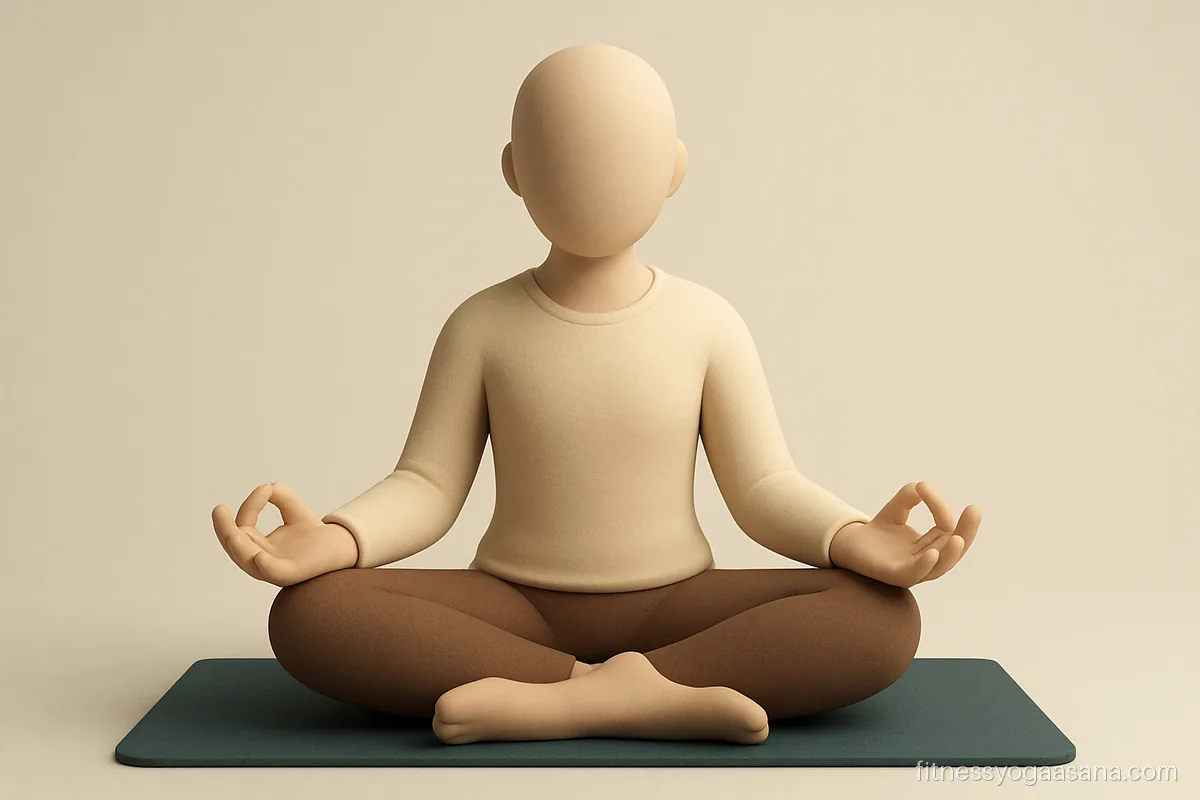
- Level
- All levels
- Hold
- 10 to 15 minutes
- Works on
- Focus, calm
Gyan mudra is the classic meditation gesture. Resting the backs of the hands on the knees keeps the arms relaxed for long sits.
Teacher's cue: Let the elbows drop and the shoulders slide away from the ears.

- Level
- All levels
- Hold
- 10 to 15 minutes
- Works on
- Energy
Prana mudra joins the ring and little fingers to the thumb. It is often practised for a sense of energy and steadiness.
Teacher's cue: Keep the index and middle fingers long but not stiff.
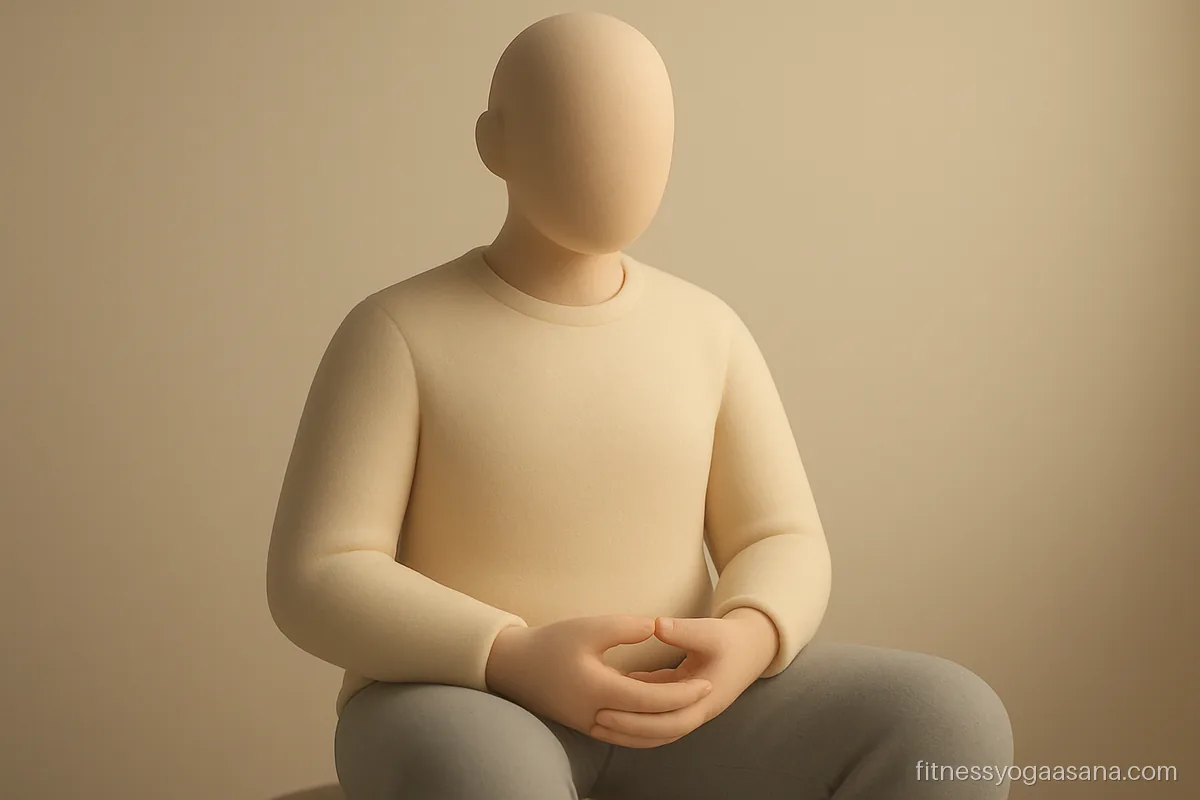
- Level
- All levels
- Hold
- 10 to 30 minutes
- Works on
- Meditation
In dhyana mudra the hands rest in the lap like a shallow bowl. It is common in long seated meditation.
Teacher's cue: Let the thumb tips barely touch, as if holding a single leaf between them.
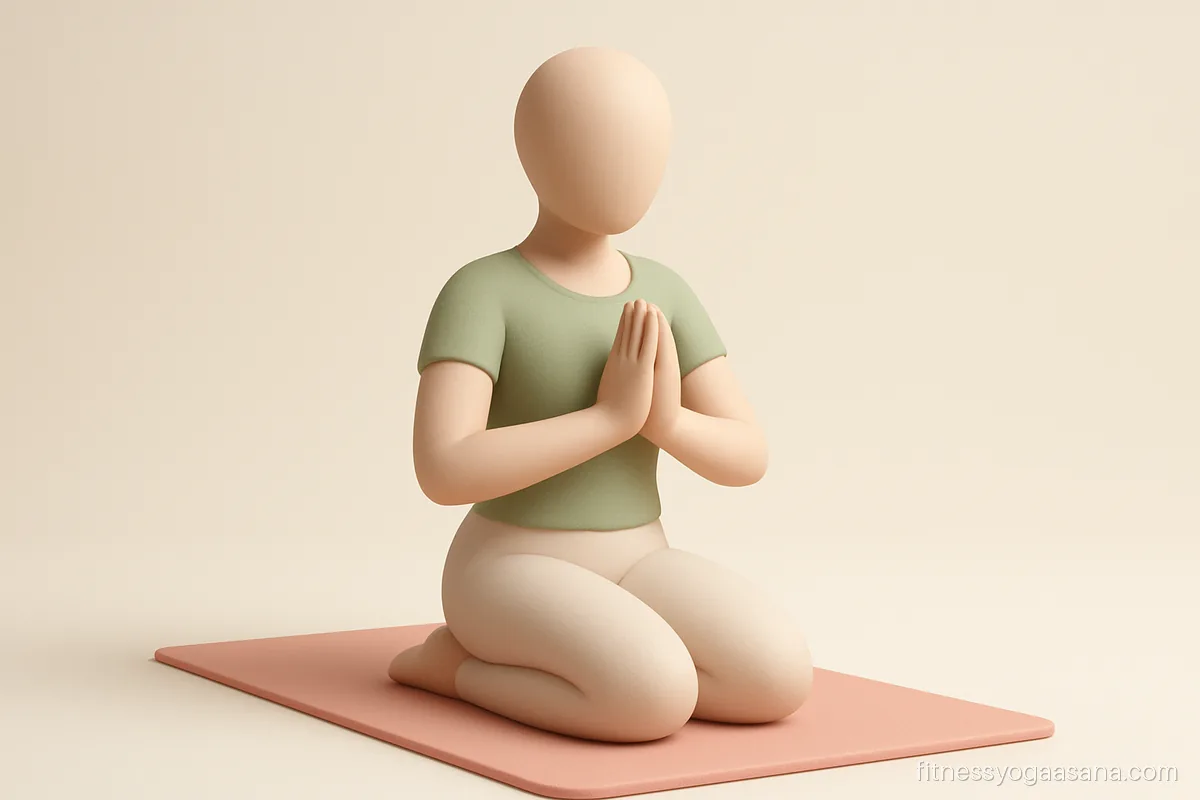
- Level
- All levels
- Hold
- 1 to 3 minutes
- Works on
- Centering
Anjali mudra is the familiar greeting gesture, used to open and close many yoga sessions.
Teacher's cue: Press the base of the palms together first, then the fingers.

- Level
- Intermediate
- Hold
- 5 to 10 breaths
- Works on
- Back, calm
Yoga mudrasana is a posture mudra: from a cross legged or lotus seat, you fold forward with the hands clasped behind the back.
Teacher's cue: Fold only as far as the hips allow, keeping the forehead heading toward the floor.

- Level
- All levels
- Hold
- 10 to 15 minutes
- Works on
- Digestion, release
Apana mudra joins the middle and ring fingers to the thumb. Tradition links it with letting go and the downward flow of energy.
Teacher's cue: Rest the hand palm up on the thigh and keep the touch light.
Types of mudras in yoga
| Type | What it is | Examples |
|---|---|---|
| Hasta (hand) | Finger positions | Gyan, prana, apana, vayu |
| Mana (head) | Eyes, tongue or face | Shambhavi, khechari |
| Kaya (posture) | Whole body shape | Yoga mudrasana, viparita karani mudra |
| Bandha (lock) | Muscle locks with the breath | Jalandhara, uddiyana, mula bandha |
| Adhara (perineal) | Pelvic muscle control | Ashwini, vajroli |
The classic phrase asana pranayama mudra bandha describes how these fit together in hatha yoga: posture, then breath, then seals and locks.
Hand mudras for focus and meditation
- Gyan mudra: index tip to thumb tip, palm up.
- Chin mudra: the same circle with palm down.
- Chinmaya mudra: the circle with the other fingers curled in.
- Adi mudra: thumb tucked in a loose fist.
- Dhyana mudra: hands resting in the lap.
- Shambhavi mudra: gaze toward the eyebrow centre.
Element mudras: air, space, fire, earth, water
- Vayu mudra (air): index folded to the base of the thumb.
- Shunya mudra (space): middle finger folded the same way.
- Surya mudra (fire): ring finger folded under the thumb.
- Prithvi mudra (earth): ring tip to thumb tip.
- Varun mudra (water): little tip to thumb tip.
Some teachers also describe akash mudra, middle tip to thumb tip, for space.
Mudras with two or more fingers
- Prana mudra: ring and little fingers to the thumb.
- Apana mudra: middle and ring fingers to the thumb.
- Apana vayu mudra: the heart mudra, combining vayu and apana.
- Udana vayu mudra: four fingertips joined, little finger free.
- Linga mudra: interlaced fingers with one thumb upright.
- Shakti mudra, shankh mudra, yoni mudra and uttarabodhi mudra: two hand mudras with distinct shapes.
- Anjali, abhaya and bhumisparsha: gestures also seen in classical art across Asia.
Other mudra names you may hear
Many smaller mudras are taught by individual teachers. We have not written full pages for them, but here is what the names refer to.
- Pushan mudra: a two hand mudra with different finger joins on each hand, linked with digestion.
- Surabhi mudra: an intricate interlocking of fingers named after a wish fulfilling cow in legend.
- Mohini mudra: a gesture described in some modern mudra books; forms vary.
- Vajroli mudra: a hatha practice of pelvic floor control, best learned from a teacher.
- Viparita karani mudra: the inverted posture known as legs up the wall when done gently.
- Power mudra: a name used online for several different gestures, with no single classical form.
How to practise a hand mudra
- Sit comfortably in sukhasana, vajrasana or on a chair with feet flat.
- Rest the hands on the knees or thighs and relax the shoulders.
- Form the mudra with light contact, no pressing or straining.
- Close the eyes and breathe slowly through the nose.
- Hold for 5 minutes at first, building to 15 minutes.
- Release, shake out the hands gently and sit for a few breaths.
Mudras pair well with slow breathing. Try one alongside anulom vilom or the breath pacer on the pranayama page.
Mudras for common goals
People often look for a mudra for sleep, weight or energy. We cover two of these in detail: mudra for sleep and mudra for weight loss. Please read them with realistic expectations. A mudra can be a calming ritual that supports good habits; it cannot replace sleep hygiene, diet, exercise or medical care.
Every mudras guide on this site
| Guide | What it covers |
|---|---|
| Prana mudra | Ring and little fingertips meet the thumb, said to lift energy |
| Yoni mudra | The interlaced hand gesture and the senses closing form |
| Vayu mudra | Index finger folded under the thumb, for the air element |
| Ashwini mudra | A rhythmic pelvic squeeze and release from hatha yoga |
| Gyan mudra | Index tip to thumb tip, palm up: the classic meditation seal |
| Surya mudra | Ring finger folded under the thumb, linked with warmth |
| Linga mudra | Interlaced fingers, one thumb upright: a warming two hand seal |
| Khechari mudra | Tongue rolled back to the palate: the safe basic form only |
| Prithvi mudra | Ring fingertip to thumb tip, a steadying earth gesture |
| Apana mudra | Middle and ring fingertips to the thumb, linked with release |
| Apana vayu mudra | Index folded, middle and ring to thumb: the heart mudra |
| Dhyana mudra | Hands cradled in the lap, thumbs touching, for meditation |
| Uttarabodhi mudra | Fingers laced, index fingers raised, thumbs down: an uplifting seal |
| Chin mudra | Thumb and index ring with palms resting face down |
| Shunya mudra | Middle finger tucked under the thumb, the space element seal |
| Abhaya mudra | Right palm raised and facing out: a sign of courage and safety |
| Mudra for sleep | Four hand gestures and a bedtime routine for easier sleep |
| Varun mudra | Little fingertip meets the thumb: the water element seal |
| Shambhavi mudra | An eye gesture: the gaze lifts toward the space between the brows |
| Bhumisparsha mudra | Fingertips reach down to the ground: the gesture of steadiness |
| Anjali mudra | Palms pressed together at the chest: the gesture of greeting |
| Adi mudra | Thumb tucked inside a loose fist, used for calm breathing |
| Mudra for weight loss | The gestures tradition links with weight, and what really works |
| Udana vayu mudra | Two gestures for the upward and the balancing breath |
| Shakti mudra | Thumbs folded in, ring and little fingers meeting: a calming two hand seal |
| Shankh mudra | Hands shaped like a conch shell, used with humming and chanting |
| Chinmaya mudra | Thumb and index circle with three fingers curled: the rib breath gesture |
Mudras are a traditional practice and research on them is limited. Use them alongside, never instead of, the care your doctor advises.
Questions people ask
What is the difference between yog mudra and yoga mudrasana?
People use yog mudra for hand gestures in general. Yoga mudrasana is a specific seated forward bend with the hands clasped behind the back, sometimes also called yoga mudra.
How many mudras are there in yoga?
There is no fixed number. The Hatha Yoga Pradipika describes ten main mudras, while modern books list fifty or more hand mudras.
How long should a mudra be held?
Start with 5 minutes and build to 15 minutes at a time. Traditional advice suggests up to 45 minutes a day, split into sessions.
Can mudras be done while walking or lying down?
Simple hand mudras can be held lying down or even while sitting on a bus. A steady seated posture is still best, because it supports calm breathing.
Do mudras really work?
Research is small and mostly early. Many people find mudras help them focus and relax, which is a real benefit. They should not be used to treat illness in place of medical care.
Practise next
 Gyan mudraIndex tip to thumb tip, palm up: the classic meditation seal
 Prana mudraRing and little fingertips meet the thumb, said to lift energy
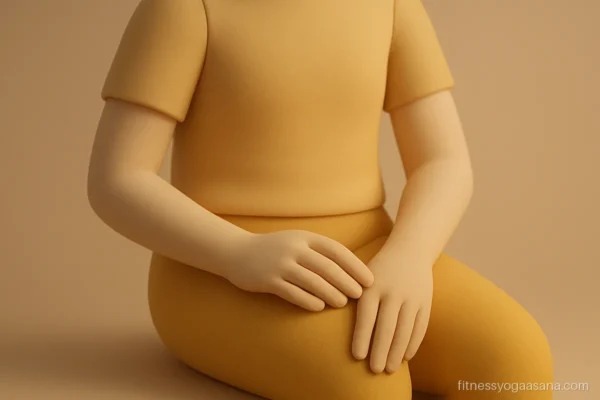 Vayu mudraIndex finger folded under the thumb, for the air element
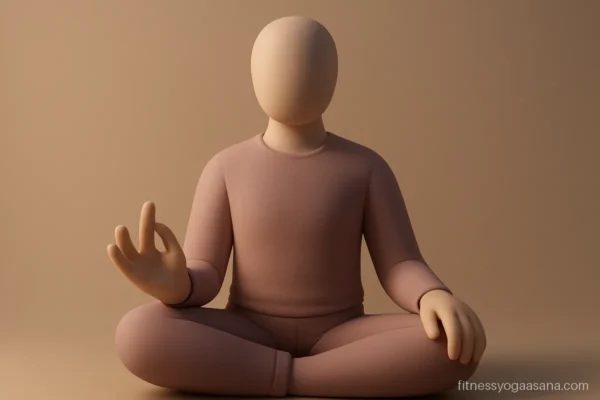 Apana mudraMiddle and ring fingertips to the thumb, linked with release
 PranayamaWhat pranayama is, how to start and every breathing practice
 Yoga meditationHow yoga and meditation fit together, with a starter practice