Yoni Mudra: Two Forms of a Calming Seal
Mudras 3 illustrations Updated 2 Nov 2026
Yoni mudra has two meanings in yoga. In the version most people see in pictures, the fingers interlace and the index fingers and thumbs join to form a triangle, held in front of the lower belly. In hatha yoga texts, yoni mudra also names a practice of closing the ears, eyes, nose and lips with the fingers, better known as shanmukhi mudra. Yoni here means source or origin, and both forms aim to turn attention inward.
This guide gives the steps for both forms, explains what tradition says about yoni mudra benefits, and notes who should keep the practice gentle.
- Meaning
- Yoni: source, origin
- Hand form
- Interlaced fingers, triangle at the belly
- Senses form
- Shanmukhi: fingers close ears, eyes, nose, lips
- Hold
- Hand form 5 to 15 min; shanmukhi short rounds
- Effect
- Inward focus, calm
- Same for
- Women and men
Yoni mudra steps: the hand form
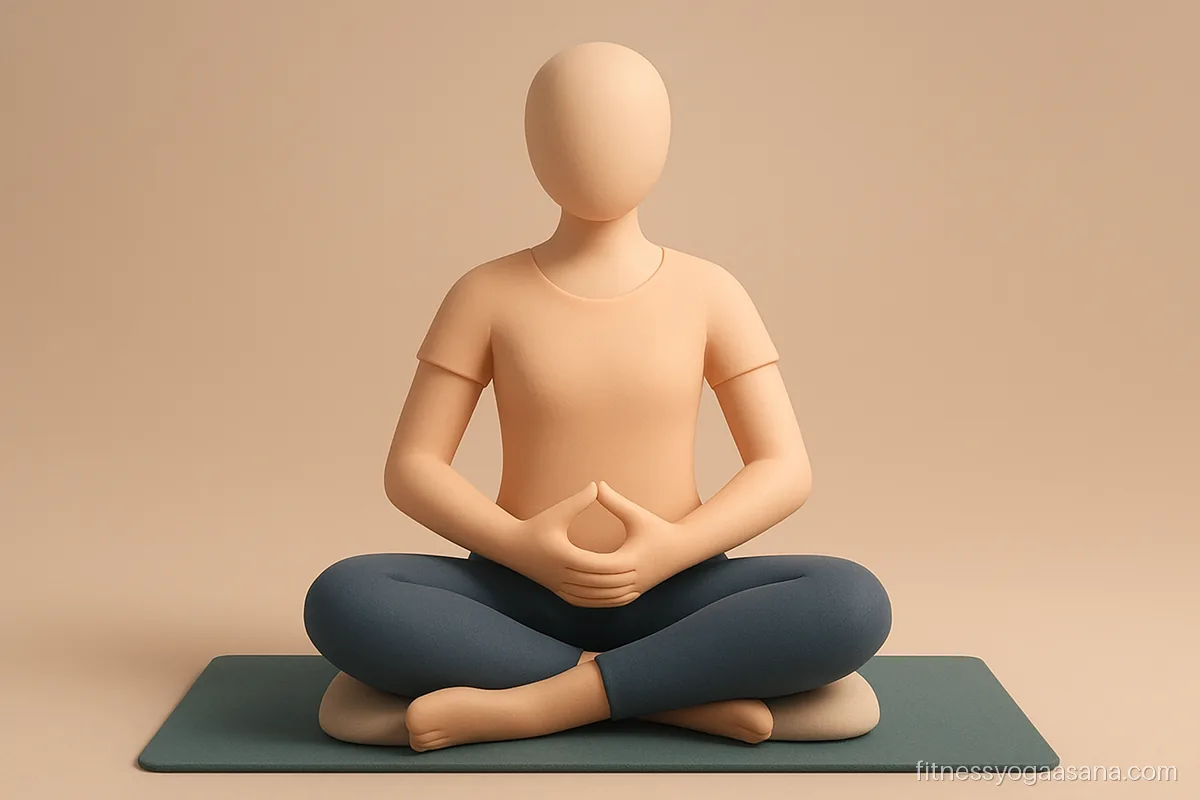
- From an upright seat, meet the palms just below the navel.
- Interlace the middle, ring and little fingers.
- Straighten the index fingers and join their tips, pointing away from you.
- Straighten the thumbs and join their tips, pointing up.
- The index fingers and thumbs now frame a triangle. Rest the hands near the navel.
- Shut the eyes and stay with unhurried breaths for 5 to 15 minutes.
Yoni mudra in pictures

- Level
- All levels
- Hold
- 5 to 15 minutes
- Works on
- Inward focus
The hand form: fingers interlaced, index fingertips joined pointing away, thumbs joined pointing up, resting near the navel.
Teacher's cue: Let the elbows soften out to the sides.
- Level
- Beginner plus
- Hold
- 3 to 5 rounds
- Works on
- Withdrawing the senses
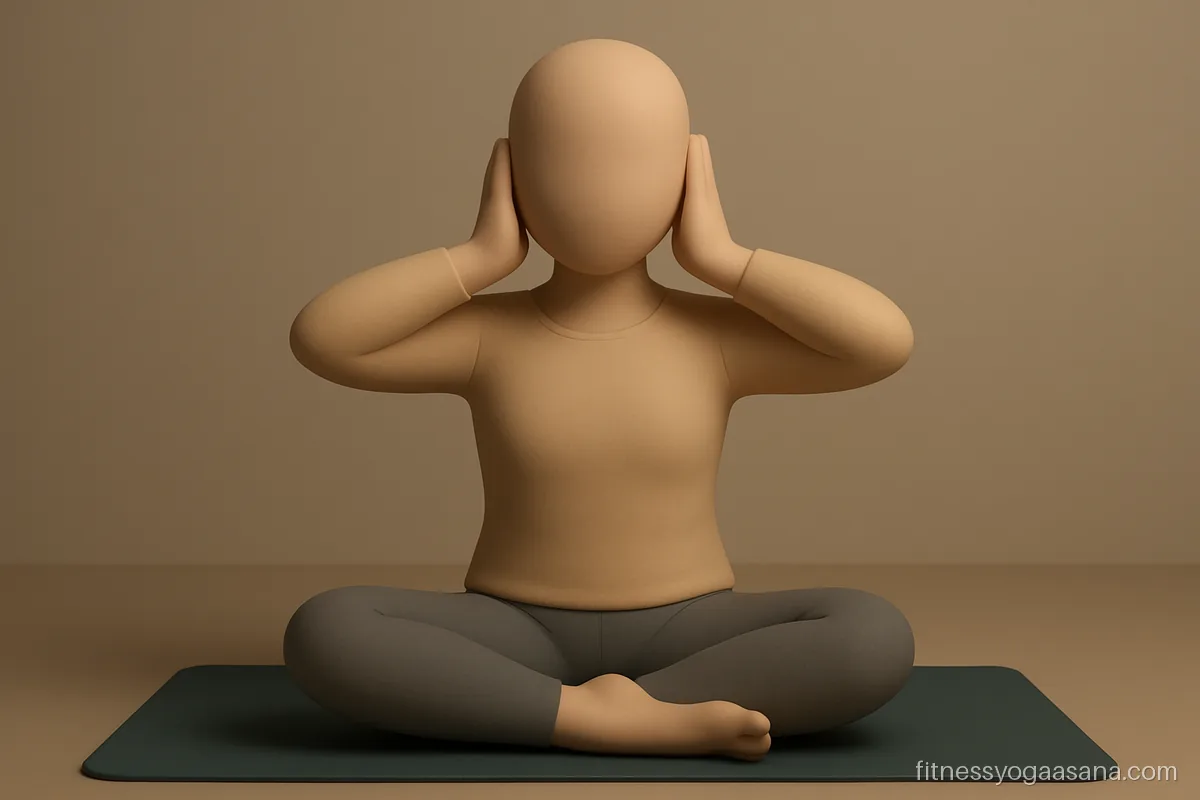
Shanmukhi, the senses closing form: thumbs on the ear flaps, index fingers over the closed eyes, middle fingers beside the nose, ring and little fingers above and below the lips.
Teacher's cue: Touch lightly; the fingers rest rather than press.
- Level
- All levels
- Hold
- 10 minutes
- Works on
- Calm
Most people hold the hand form during seated breathing or meditation, with the spine tall.
Teacher's cue: Feel the breath move under the hands.
Shanmukhi mudra: the original yoni mudra of hatha texts
The Hatha Yoga Pradipika and later texts describe closing the six openings of the face, which is why it is called shanmukhi, six faced. Some people call this the original yoni mudra.
- Sit tall and raise the elbows to shoulder height.
- Rest the thumbs on the ear flaps, the index fingers on the closed eyelids, the middle fingers beside the nostrils, and the ring and little fingers above and below the lips.
- Breathe in slowly, narrow the nostrils slightly with the middle fingers and pause briefly.
- Release the nostrils and breathe out slowly.
- Repeat 3 to 5 times, then lower the arms and sit quietly.
For a softer option, block only the ears and hum on each out breath, the way bhramari is done.
Yoni mudra benefits in tradition
Tradition describes yoni mudra benefits as turning attention away from the outer world, calming the mind and preparing for meditation. The shanmukhi form is a classic tool for pratyahara, the withdrawal of the senses described in the eight limbs. These effects are experienced as calm and focus; there is little scientific research on either form.
Yoni mudra benefits for female and male practitioners
Online posts sometimes promise specific effects such as yoni mudra benefits for female hormones or yoni mudra benefits for male vitality. There is no reliable evidence for these claims. The practice is the same for everyone, and its realistic benefit is a quieter mind. For hormonal or fertility concerns, see a doctor; gentle routines on fertility yoga and yoga for PCOS can support medical care.
Safety notes
The hand form is safe for everyone. In the shanmukhi form keep pauses brief, and leave them out entirely with raised blood pressure, an eye problem or a tendency to panic. Do not press on the eyeballs. If you wear contact lenses, remove them first or rest the fingers on the eyebrows instead.
Mudras are a traditional practice and research on them is limited. Use them alongside, never instead of, the care your doctor advises.
Questions people ask
What is yoni mudra?
A seal used in meditation. The common hand form interlaces the fingers into a triangle; the classical form closes the senses with the fingers and is also called shanmukhi mudra.
Is shanmukhi mudra the same as yoni mudra?
In hatha texts, yes, the names are used for the same senses closing practice. In popular use, yoni mudra usually means the hand triangle.
How long should I hold yoni mudra?
The hand form for 5 to 15 minutes; the shanmukhi form for 3 to 5 short rounds.
Can men do yoni mudra?
Yes. The practice and its effects are the same for everyone.
When is the best time to practise yoni mudra?
Before or during meditation, after asanas and breathing, when the body is settled.
Practise next
 Yoga mudraWhat mudras are, the main hand mudras and how to practise them
 Bhramari pranayamaThe humming bee breath: steps, benefits and how many rounds
 8 limbs of yogaPatanjali's eightfold path from ethics to deep meditation
 Dhyana mudraHands cradled in the lap, thumbs touching, for meditation
 Yoga meditationHow yoga and meditation fit together, with a starter practice
More in mudras
 Prana mudraRing and little fingertips meet the thumb, said to lift energy
 Vayu mudraIndex finger folded under the thumb, for the air element
 Ashwini mudraA rhythmic pelvic squeeze and release from hatha yoga
 Gyan mudraIndex tip to thumb tip, palm up: the classic meditation seal
 Surya mudraRing finger folded under the thumb, linked with warmth
 Linga mudraInterlaced fingers, one thumb upright: a warming two hand seal
 Khechari mudraTongue rolled back to the palate: the safe basic form only
 Prithvi mudraRing fingertip to thumb tip, a steadying earth gesture