Gyan Mudra: The Gesture of Knowledge
Mudras 3 illustrations Updated 2 Nov 2026
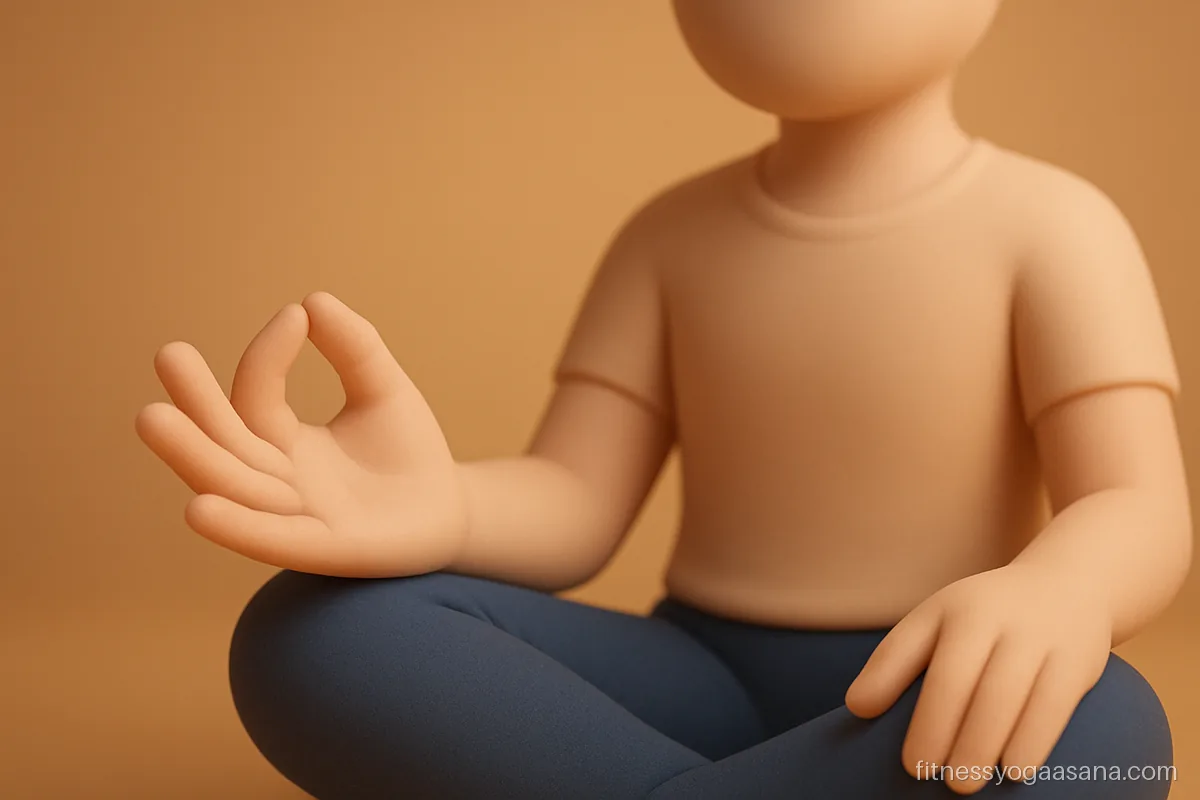
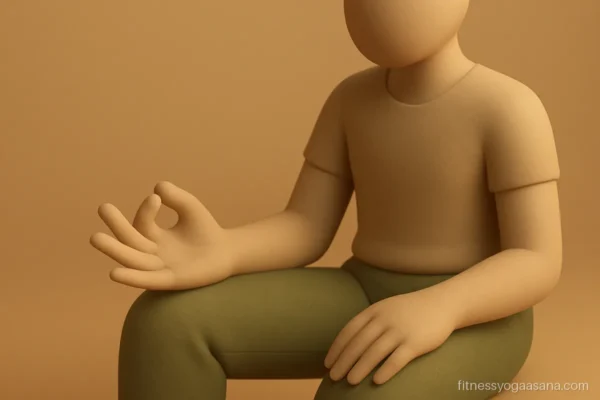
Gyan mudra is the hand shape most people picture when they think of yoga: the tip of the index finger meets the tip of the thumb to make a small circle, the other three fingers stay straight, and the hand rests palm up on the knee. Gyan, also written jnana or gyana, means knowledge or wisdom, and the gesture is traditionally held during meditation and breathing practice.
Below you will find the exact gyan mudra hand position, its meaning, how it differs from chin mudra, how to use it in meditation, and a realistic view of gyan mudra benefits.
- Other spellings
- Jnana mudra, gyana mudra
- Fingers
- Index tip touches thumb tip
- Palm
- Facing up (palm down is chin mudra)
- Used in
- Meditation, pranayama, seated poses
- Hold
- As long as you sit, often 10 to 30 minutes
- Symbolism
- Individual joined with universal awareness
Gyan mudra hand position, step by step
- Sit in any comfortable upright posture.
- Place the backs of the wrists on the knees so the palms open upward.
- Touch the pad of the index finger to the pad of the thumb, forming a ring.
- Leave the remaining three fingers long, lightly side by side.
- Relax the arms so the elbows soften toward the body.
- Breathe naturally and keep the touch light.
Gyan mudra in pictures
- Level
- All levels
- Hold
- 10 to 30 minutes
- Works on
- Focus
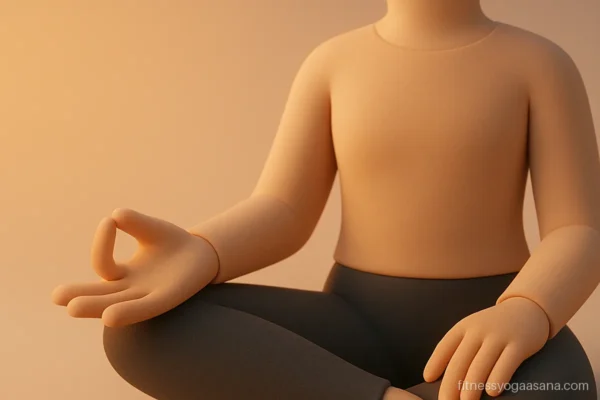
The circle of thumb and forefinger is light and round; the three remaining fingers are long but soft.
Teacher's cue: Make the circle as if holding a single grain of rice between the tips.

- Level
- All levels
- Hold
- 10 to 20 minutes
- Works on
- Meditation
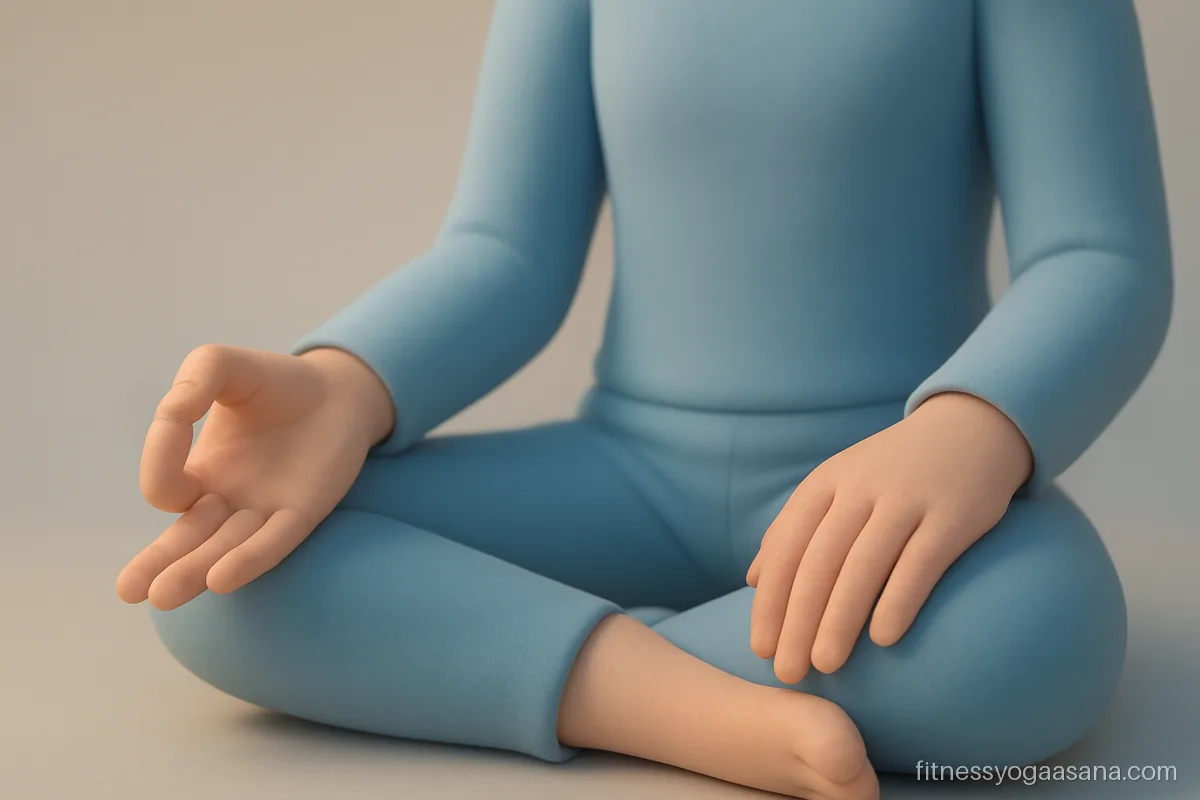
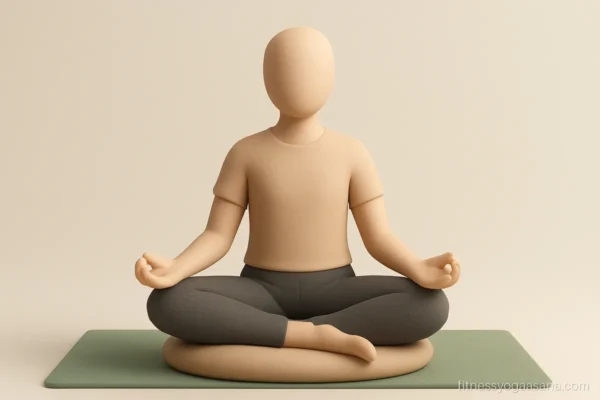
Gyan mudra is the traditional companion of a still, upright seat for meditation.
Teacher's cue: Let the hands become so quiet you forget them.
- Level
- All levels
- Hold
- 10 minutes
- Works on
- Variation
In one variation the index tip touches the root of the thumb instead of its tip. Both forms are taught.
Teacher's cue: Pick one form and keep it for the whole sitting.
Meaning of jnana mudra
The thumb is said to represent universal awareness and the index finger the individual self. Joining them symbolises the union of the two, the aim of yoga. The three straight fingers are linked with the three qualities of nature, called gunas, which the practitioner moves beyond. In the five element view, the thumb is fire and the index finger air.
Gyan mudra or chin mudra?
They share the same finger circle. In gyan mudra the palm faces up, an open, receptive gesture often used in daytime meditation. In chin mudra the palm faces down, which some teachers describe as grounding. Fold the last three fingers into the palm and it turns into chinmaya mudra. Teachers differ on which is which, so follow your own teacher's naming.
Gyan mudra meditation
Use gyan mudra meditation as a simple daily sit: ten minutes, hands in the mudra, attention on the breath at the nostrils. The finger contact gives a subtle point of awareness; when the mind drifts, noticing the touch can bring you back. It pairs naturally with alternate nostril breathing and yoga meditation.
Gyan mudra benefits and jnana mudra benefits
Tradition says the gesture sharpens concentration, calms the mind and supports memory. Many students find that it does help them settle, mostly because it becomes a cue: hands in the mudra means time to be still. There is very little scientific research on the gesture itself, so claims about curing insomnia or improving intelligence should be treated with caution. The benefits of regular meditation, which this mudra accompanies, are better supported.
Practice notes
Any time is fine, though early morning is traditional. If your fingers tingle or stiffen, open and shake them out, then return. There are no known risks. Compare it with the rest of the hand mudras we describe.
Mudras are a traditional practice and research on them is limited. Use them alongside, never instead of, the care your doctor advises.
Questions people ask
Which fingers are used in gyan mudra?
Thumb and forefinger meet pad to pad. The other three fingers stay straight.
What is the difference between gyan mudra and chin mudra?
Gyan mudra is held with palms up, chin mudra with palms down. The finger circle is the same.
How long should I hold gyan mudra?
For as long as you meditate or practise breathing, often 10 to 30 minutes.
Can gyan mudra improve memory?
Tradition links it with memory and focus. Evidence is limited, though regular meditation itself may help attention.
Is jnana mudra the same as gyan mudra?
Yes. All three spellings render one Sanskrit word for knowing.
Practise next
 Chin mudraThumb and index ring with palms resting face down
 Chinmaya mudraThumb and index circle with three fingers curled: the rib breath gesture
 Yoga mudraWhat mudras are, the main hand mudras and how to practise them
 Yoga meditationHow yoga and meditation fit together, with a starter practice
 Dhyana mudraHands cradled in the lap, thumbs touching, for meditation
More in mudras
 Prana mudraRing and little fingertips meet the thumb, said to lift energy
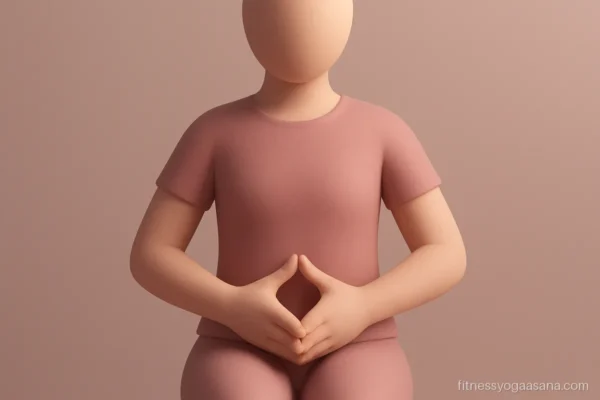 Yoni mudraThe interlaced hand gesture and the senses closing form
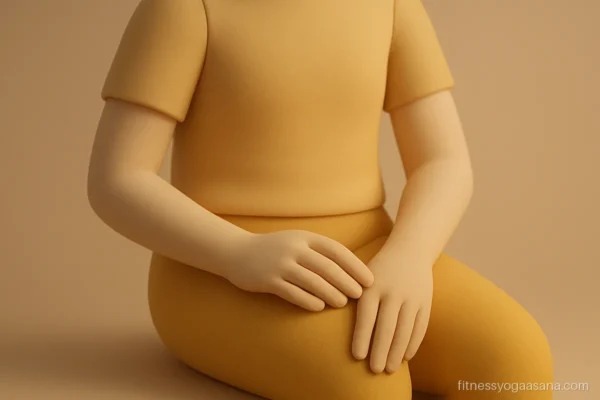 Vayu mudraIndex finger folded under the thumb, for the air element
 Ashwini mudraA rhythmic pelvic squeeze and release from hatha yoga
 Surya mudraRing finger folded under the thumb, linked with warmth
 Linga mudraInterlaced fingers, one thumb upright: a warming two hand seal
 Khechari mudraTongue rolled back to the palate: the safe basic form only
 Prithvi mudraRing fingertip to thumb tip, a steadying earth gesture