Shankh Mudra: The Conch Shell Gesture
Mudras 3 illustrations Updated 2 Nov 2026
In shankh mudra the two hands combine to mimic a conch shell. The four fingers of one hand wrap around the thumb of the other, and the thumb of the first hand touches the middle finger of the second. Shankh, also spelled shankha, means conch, the spiral shell blown like a horn in Indian ceremonies. Because of this link with sound, the gesture is traditionally associated with the throat, voice and chanting.
Read on for the hand shape, how to pair it with humming or chanting, the traditional list of shankh mudra benefits, where those claims fall short, and who may want another gesture.
- Meaning
- Shankh: conch shell
- Also written
- Shankha mudra
- Hands
- Both, forming a shell shape
- Linked with
- Throat, voice, sound
- Hold
- 5 to 15 minutes
- Pair with
- Humming, chanting om
How to do shankh mudra
- Find a seat where the back stays tall.
- Hold the right thumb up and wrap the four fingers of the left hand around it.
- Bring the right fingers over the back of the left hand.
- Touch the tip of the right middle finger to the tip of the left thumb.
- Hold the shell before the breastbone, or let it rest lower down.
- Breathe slowly through the nose for five to fifteen minutes.
- Change hands halfway through if you like.
Shankh mudra in pictures
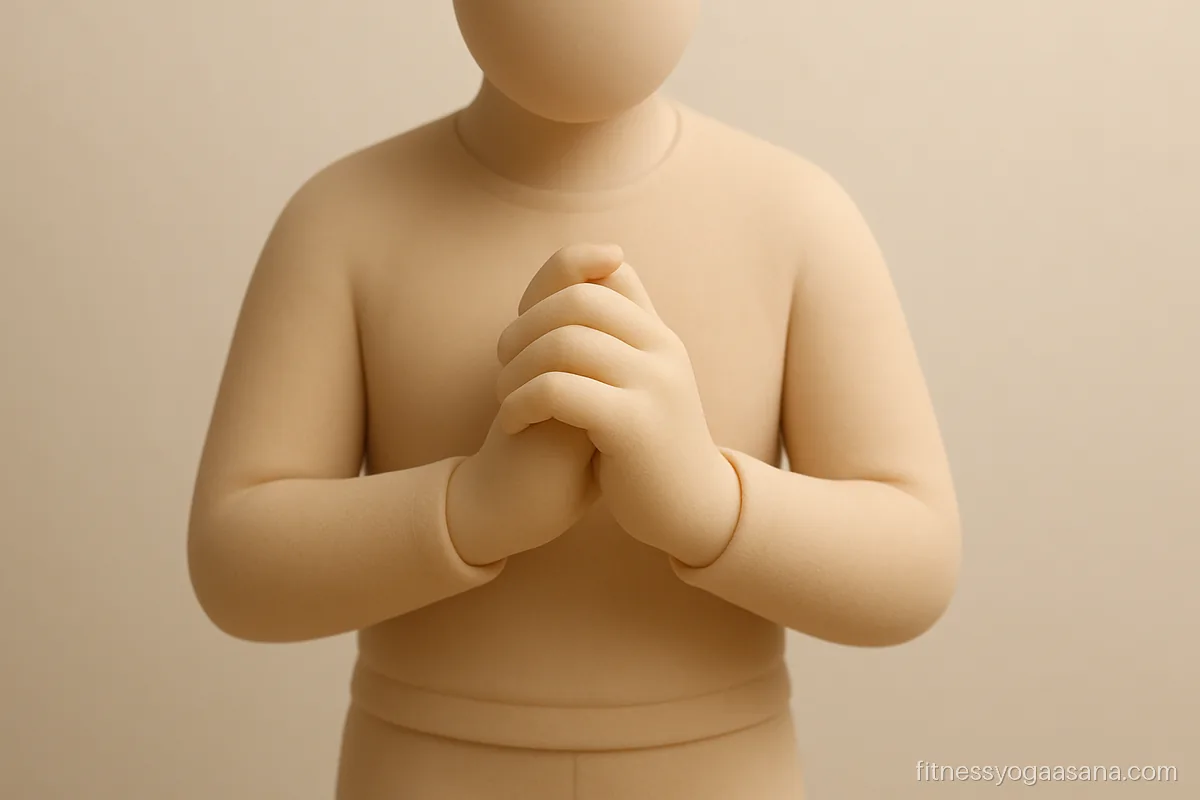
- Level
- All levels
- Hold
- 5 to 15 minutes
- Works on
- Throat, voice
The fingers of one hand wrap around the opposite thumb; the free thumb touches the middle finger, forming a shell.
Teacher's cue: Hold the shape loosely, as if cradling a small shell.

- Level
- All levels
- Hold
- 5 minutes
- Works on
- Sound, calm
Humming while holding the conch shape is a gentle way to feel vibration in the chest and throat.
Teacher's cue: Keep the humming deep and steady.
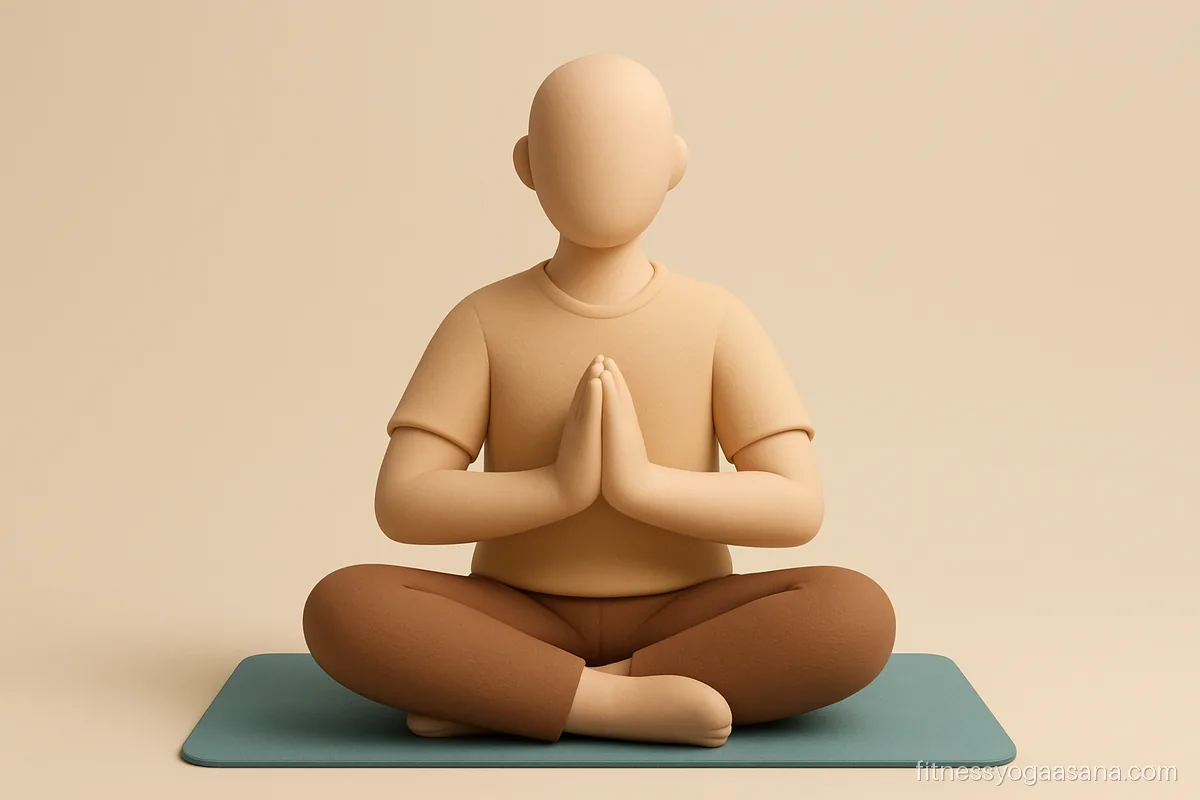
- Level
- All levels
- Hold
- 10 to 15 minutes
- Works on
- Meditation
During long sittings, lower the joined hands onto the lap to spare the shoulders.
Teacher's cue: Allow the elbows to sink and the shoulder tops to ease.
Using it with humming and chanting
Because the conch is blown to make sound, shankh mudra is often held during humming or chanting. Try five rounds of bhramari, then chant om slowly three to five times, feeling the vibration in the chest and throat. Many people find this combination calming at the start or end of practice. Chants often used in yoga are listed on yoga mantra.
Shankh mudra benefits in tradition
Mudra books describe shankh mudra benefits as a clearer voice, relief from throat discomfort, better speech and support for digestion. Some link it with the thyroid. These claims are traditional and have not been studied in proper trials. Humming and slow breathing can relax the throat and ease tension, which may explain why singers and teachers enjoy it. Persistent hoarseness, throat pain or thyroid symptoms need a doctor's check.
Who might prefer another gesture
Should wrapped fingers ache from arthritis or stiff thumbs, open the hands on the lap or switch to chin mudra. For meditation without sound, the simple dhyana mudra may feel easier for longer sits. The gesture itself carries no known risk.
A short voice warm up
Teachers, singers and anyone who speaks a lot can try this: sit tall in shankh mudra, take three slow nasal breaths, hum gently on five exhales, then chant a long om three times. Finish with a few rounds of ujjayi. The whole sequence takes about four minutes and warms the voice without strain.
Names and spellings
Shankh mudra, shankha mudra and conch mudra all refer to this gesture. It appears in several mudra books with small differences in which finger touches which. Choose one version and practise it consistently. Other hand gestures appear side by side on the yoga mudra page.
Mudras are a traditional practice and research on them is limited. Use them alongside, never instead of, the care your doctor advises.
Questions people ask
What is shankh mudra?
A two handed gesture shaped like a conch shell, traditionally linked with the throat and voice.
What are shankh mudra benefits?
Tradition says it supports the voice and throat. Any calming effect comes mainly from slow breathing and humming.
Is shankha mudra the same as shankh mudra?
Yes, the extra a is just an alternative spelling.
How long should I hold shankh mudra?
Five to fifteen minutes, switching hands halfway if you like.
Can shankh mudra help the thyroid?
There is no evidence. Thyroid conditions need medical treatment.
Practise next
 Bhramari pranayamaThe humming bee breath: steps, benefits and how many rounds
 Yoga mantraOm, peace chants and closing prayers with meanings
 Yoga mudraWhat mudras are, the main hand mudras and how to practise them
 Udana vayu mudraTwo gestures for the upward and the balancing breath
 Chin mudraThumb and index ring with palms resting face down
 Ujjayi pranayamaThe ocean breath: a soft throat sound for steady breathing
More in mudras
 Prana mudraRing and little fingertips meet the thumb, said to lift energy
 Yoni mudraThe interlaced hand gesture and the senses closing form
 Vayu mudraIndex finger folded under the thumb, for the air element
 Ashwini mudraA rhythmic pelvic squeeze and release from hatha yoga
 Gyan mudraIndex tip to thumb tip, palm up: the classic meditation seal
 Surya mudraRing finger folded under the thumb, linked with warmth
 Linga mudraInterlaced fingers, one thumb upright: a warming two hand seal
 Khechari mudraTongue rolled back to the palate: the safe basic form only