Abhaya Mudra: The Raised Palm of Fearlessness
Mudras 3 illustrations Updated 2 Nov 2026
Abhaya mudra is a single hand gesture: the right hand is raised to about shoulder height, the palm faces outward, and the fingers point straight up, while the left hand rests in the lap or by the side. Abhaya means without fear. Across India and much of Asia the raised open palm is an ancient sign of reassurance, protection and peace, and it appears in sculpture and painting over many centuries.
This page explains how to hold it comfortably, what it has meant in classical art, how people use it in meditation today, and what to expect from the practice. It is also written abhay mudra.
- Meaning
- Abhaya: fearlessness
- Right hand
- Raised to shoulder height, palm facing out
- Left hand
- Resting in the lap or on the knee
- Message
- Reassurance, protection, peace
- Hold
- 3 to 10 minutes
- Arm fatigue
- Rest the elbow on a cushion or alternate
How to hold abhaya mudra
- Sit upright, or stand in tadasana.
- Bend the right elbow and raise the right hand to about shoulder height.
- Turn the palm to face forward, fingers together and pointing up.
- The other hand lies in the lap or on its knee, or hangs loose when you stand.
- Relax the shoulders and breathe slowly.
- Hold for three to ten minutes, lowering the arm whenever it tires.
Abhaya mudra in pictures
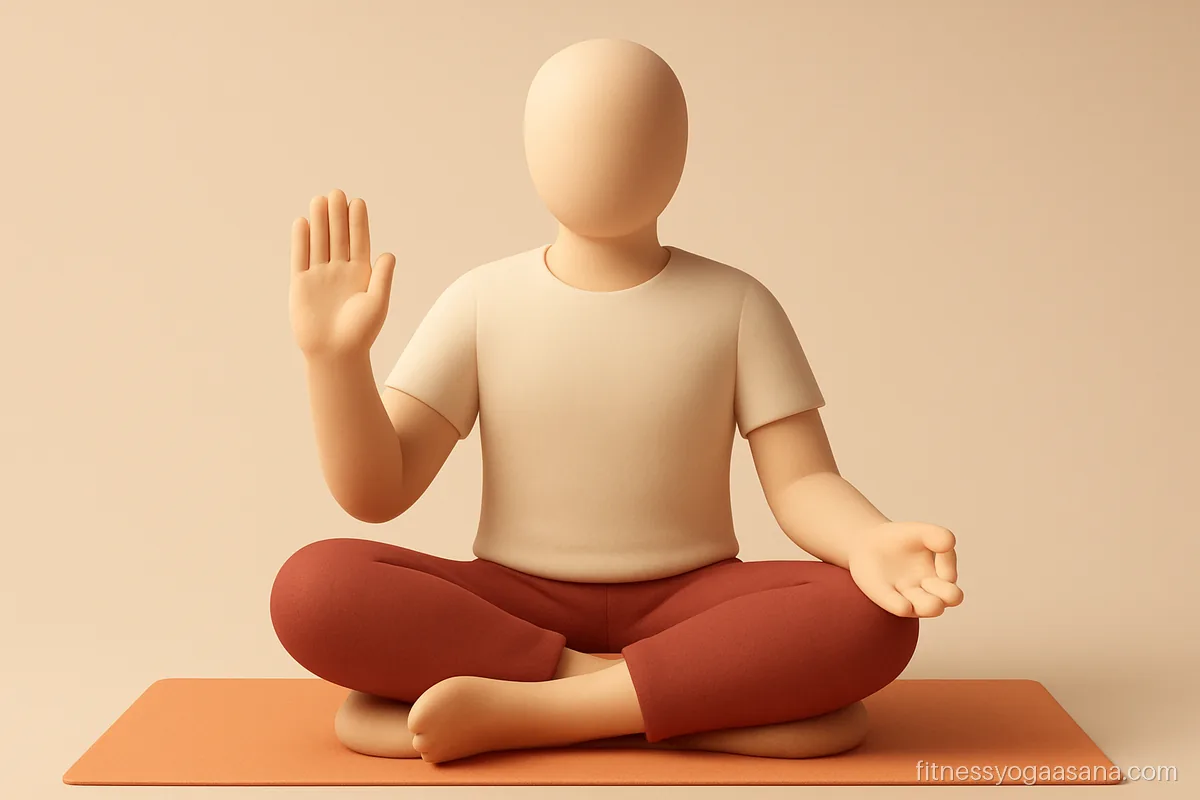
- Level
- All levels
- Hold
- 3 to 10 minutes
- Works on
- Courage, calm
The right hand lifts to shoulder level with the palm open toward the world; the left hand rests quietly on the knee.
Teacher's cue: Keep the shoulder relaxed even though the hand is raised.

- Level
- All levels
- Hold
- As long as comfortable
- Works on
- Openness
Fingers stay together and gently straight; the palm is open, not pushed forward.
Teacher's cue: Imagine showing an empty, friendly hand to someone you have just met.
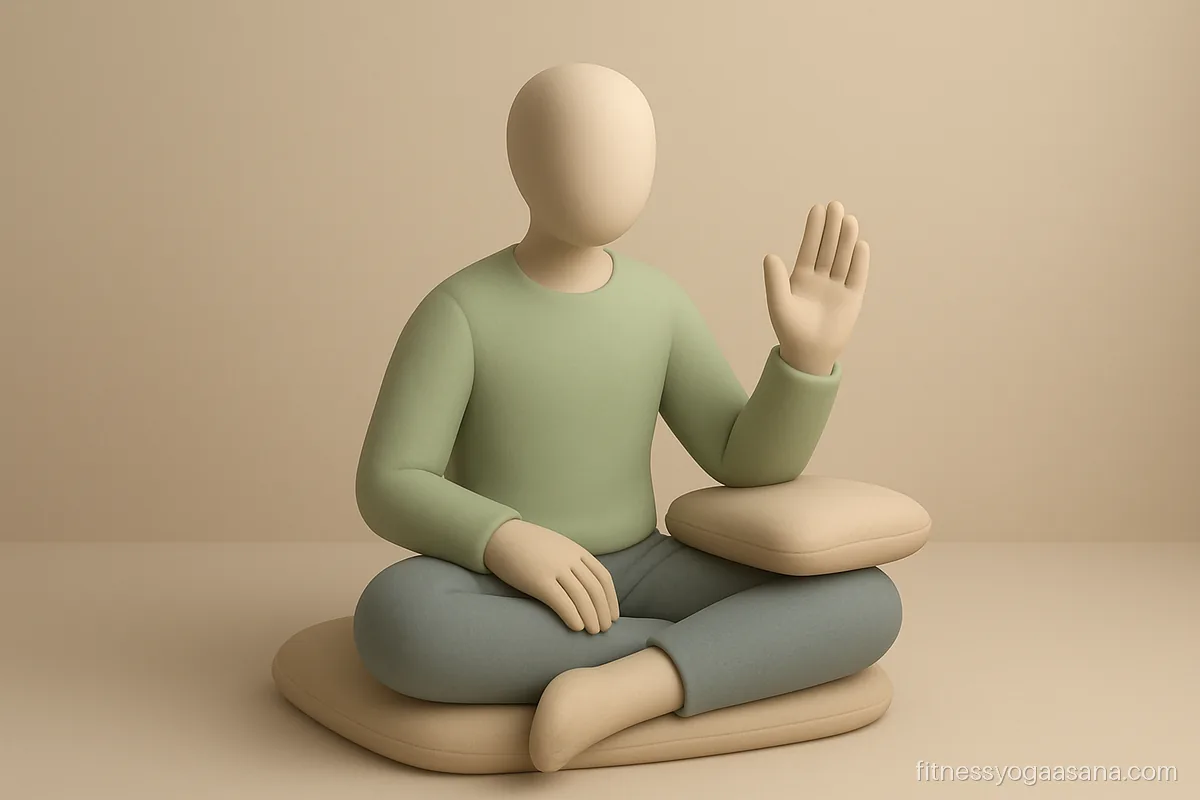
- Level
- All levels
- Hold
- 10 minutes
- Works on
- Comfort
Long sit ahead? Rest that elbow on something firm so the hand stays up by itself.
Teacher's cue: Lower the hand the moment the shoulder starts to ache.
Abhaya mudra in classical art
The raised open palm is one of the oldest gestures in Indian art and is seen widely in sculptures and paintings across South and East Asia. It signals that the figure offers protection and that the viewer need not fear. Abhaya mudra paired with a lowered giving hand is a common combination in temple and museum art. In everyday life the same open palm means greeting or peace in many cultures.
Using abhaya mudra in practice
Modern practitioners use the gesture as a reminder of courage and calm, for example before a difficult conversation, an exam or a medical appointment. A simple practice: sit, raise the right hand in abhaya mudra, and with each out breath repeat silently a short phrase such as I can meet this calmly. After a few minutes, lower the hand and rest it in dhyana mudra for quiet sitting.
What abhaya mudra can and cannot do
There is no research on this gesture's effects. It works mainly as a symbolic cue, and symbols can be powerful for focus and mood. If fear or anxiety is strong or frequent, a breathing practice such as bhramari and support from a professional will help far more than any gesture. See yoga for stress and anxiety.
Comfort tips for a raised hand
A raised arm tires quickly. Keep the elbow close to the body rather than out to the side, and bend it so the forearm is nearly vertical. Practise with the eyes open at first so you can notice when the shoulder lifts. Switching to the left hand for a minute is fine if your teacher allows; some traditions always use the right.
Mudras are a traditional practice and research on them is limited. Use them alongside, never instead of, the care your doctor advises.
Questions people ask
What is abhaya mudra?
A gesture with the right palm raised at shoulder height facing outward, symbolising fearlessness and protection.
What does abhaya mean?
Without fear, or fearlessness.
Which hand is used in abhaya mudra?
Usually the right hand is raised, with the left resting in the lap or by the side.
How long should I hold abhaya mudra?
Three to ten minutes, lowering the arm whenever it tires.
Is abhay mudra the same as abhaya mudra?
Yes, abhay is the Hindi spelling.
Can I hold abhaya mudra while standing?
Yes. Stand tall in mountain pose, raise the right palm and let the left arm hang relaxed by your side.
Practise next
 Dhyana mudraHands cradled in the lap, thumbs touching, for meditation
 Bhumisparsha mudraFingertips reach down to the ground: the gesture of steadiness
 Uttarabodhi mudraFingers laced, index fingers raised, thumbs down: an uplifting seal
 Anjali mudraPalms pressed together at the chest: the gesture of greeting
 Yoga mudraWhat mudras are, the main hand mudras and how to practise them
More in mudras
 Prana mudraRing and little fingertips meet the thumb, said to lift energy
 Yoni mudraThe interlaced hand gesture and the senses closing form
 Vayu mudraIndex finger folded under the thumb, for the air element
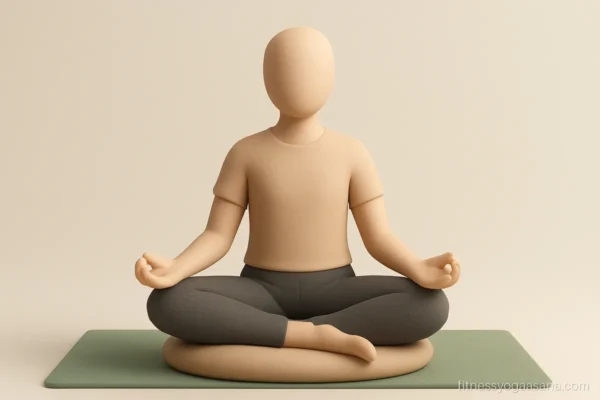 Ashwini mudraA rhythmic pelvic squeeze and release from hatha yoga
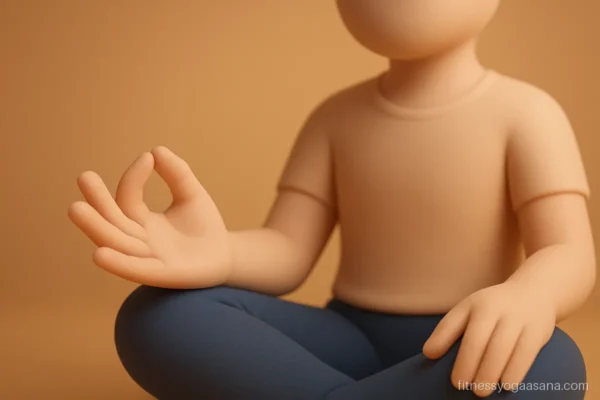 Gyan mudraIndex tip to thumb tip, palm up: the classic meditation seal
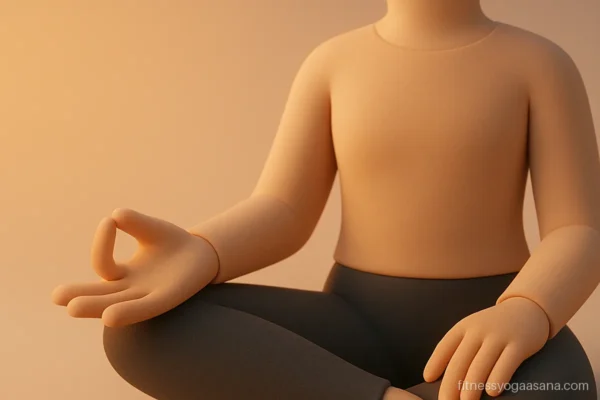 Surya mudraRing finger folded under the thumb, linked with warmth
 Linga mudraInterlaced fingers, one thumb upright: a warming two hand seal
 Khechari mudraTongue rolled back to the palate: the safe basic form only