Anjali Mudra: Joining the Palms at the Heart
Mudras 3 illustrations Updated 2 Nov 2026
Anjali mudra is the familiar gesture of pressing both palms flat against each other before the heart, thumbs resting lightly on the breastbone. Anjali means offering or a pair of cupped hands. It is the shape of the everyday Indian greeting, which is why it is also called namaskar mudra or pranamasana when used in a pose. In yoga classes it often opens and closes practice, and it is the first and last position of every round of sun salutation.
On this page: how to form anjali mudra well, its role in surya namaskar, the meaning behind it, anjali mudra benefits that are realistic, and a few short ways to use it during the day.
- Meaning
- Anjali: offering, joined hands
- Also called
- Namaskar mudra, pranam mudra
- Hands
- Palms together, thumbs at breastbone
- Used in
- Greeting, prayer pose, sun salutation
- Hold
- A few breaths to several minutes
- Good for
- Pausing, centring, posture
How to do anjali mudra
- Stand or sit with the spine tall.
- Join the two palms ahead of the breastbone.
- Rest the thumbs lightly against the breastbone.
- Point the fingers upward, keeping them together.
- Allow the elbows to hang and the shoulder tops to melt downward.
- Press the palms gently and evenly, then breathe slowly for a few rounds.
Anjali mudra in pictures

- Level
- All levels
- Hold
- 3 to 5 breaths
- Works on
- Centring
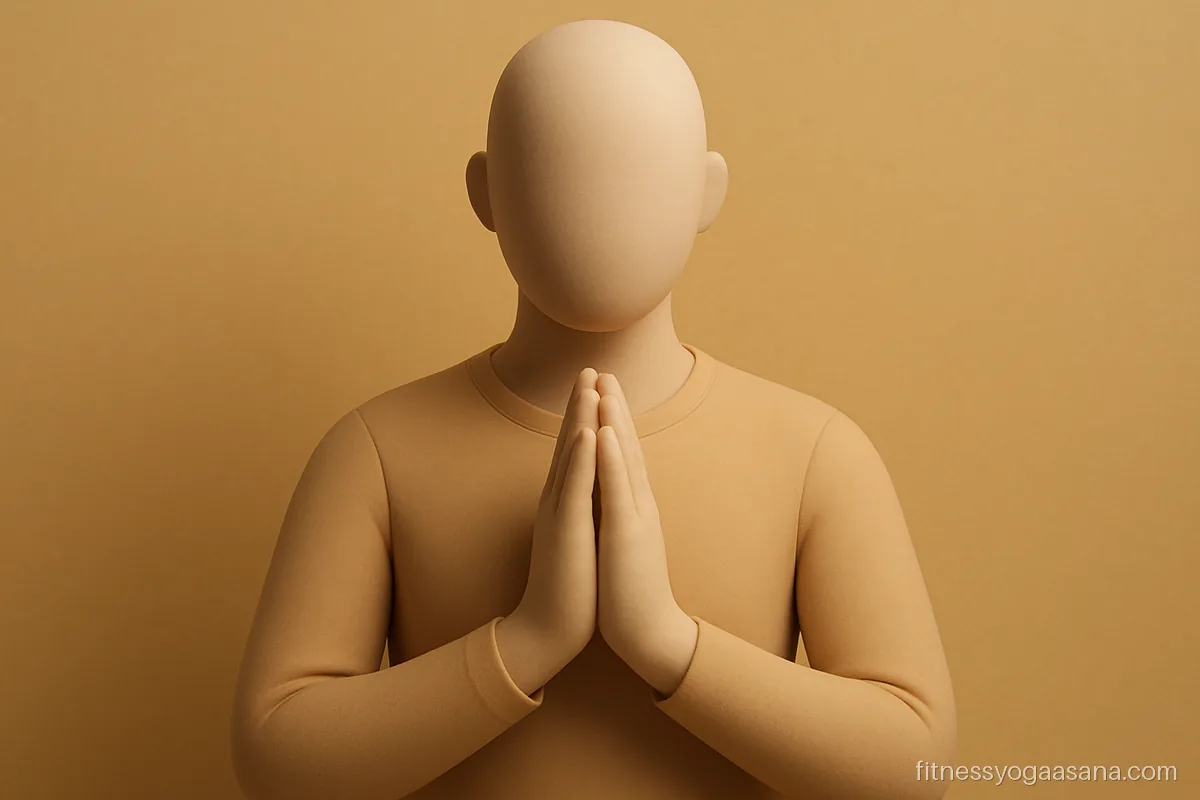
Standing with the palms joined at the heart is the opening position of sun salutation.
Teacher's cue: Press the palms evenly so neither hand pushes the other.
- Level
- All levels
- Hold
- Any length
- Works on
- Hand awareness
A small hollow can stay between the palms, like holding a flower bud between the hands.
Teacher's cue: Keep the fingers together and pointing upward.
- Level
- All levels
- Hold
- 1 minute
- Works on
- Intention
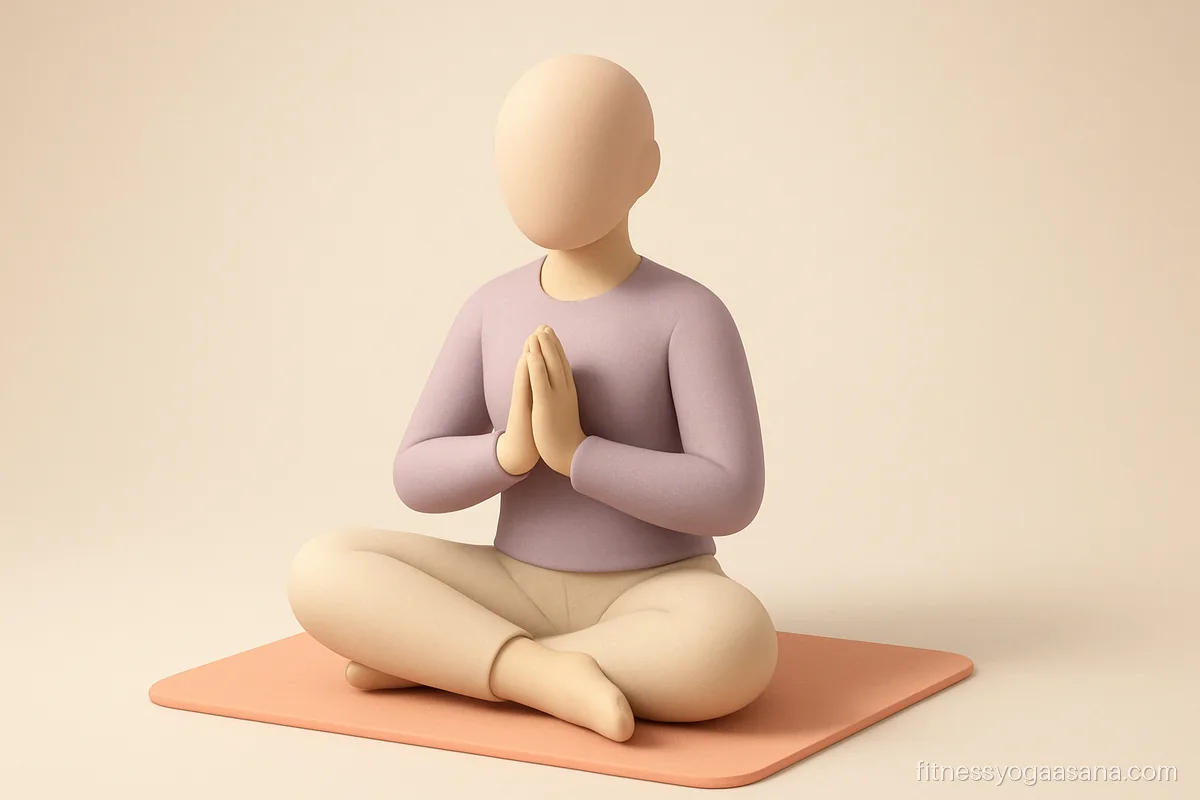
Sitting with joined palms for a few breaths is a simple way to mark the start of meditation.
Teacher's cue: Bow the head slightly and then sit tall again.
Anjali mudra in surya namaskar
In surya namaskar steps, the first and last positions are pranamasana, standing with the palms in anjali mudra. Some styles also bring the hands back to the heart between rounds. Searches for surya namaskar mudra usually mean this gesture. Using it at the start gives you a moment to set the breath rhythm before the movement begins.
The meaning of the gesture
Joining the two hands has long been read as bringing two sides into balance: right and left, action and rest. As a greeting, it shows respect and humility. In practice it is a way of saying that this moment is different from the rush that came before. Its value is the pause it creates, which you can carry into the session ahead.
Anjali mudra benefits
- Gently stretches the wrists and fingers, useful for keyboard users.
- Encourages an upright chest and relaxed shoulders.
- Creates a short pause that can settle the breath.
- Helps mark the beginning and end of practice.
Claims that it balances the brain hemispheres are not supported by research. Treat it as a posture and attention practice.
Variations to try
- Raised anjali: palms together above the head, as in the second step of sun salutation.
- Reverse prayer: palms together behind the back, a strong shoulder stretch; hold the elbows instead if it is too intense.
- Wrist stretch: from anjali mudra, lower the joined hands toward the waist while keeping the palms pressed, feeling the stretch in the wrists.
- Bowing: touch the thumbs to the forehead and then to the heart.
Small daily uses
Before a meeting, join the palms for three breaths. After long typing, press the palms together and lower them for a wrist stretch. At night, sit on the bed with joined hands and recall one thing that went well. Each of these turns the joined hands into a cue to stop for a moment. For more hand gestures, see the yoga mudra guide and the calming dhyana mudra.
Mudras are a traditional practice and research on them is limited. Use them alongside, never instead of, the care your doctor advises.
Questions people ask
What is anjali mudra?
Palms pressed flat against each other at heart level, used for greeting and at the start of practice.
Is namaskar mudra the same as anjali mudra?
Yes. Both names describe palms joined at the heart.
Which surya namaskar step uses anjali mudra?
Pranamasana, the first and last positions of each round.
What are anjali mudra benefits?
A gentle wrist stretch, better posture and a calming pause. Larger claims are not proven.
How long should I hold anjali mudra?
A few breaths at the start of practice is enough, or longer during quiet sitting.
Practise next
 Surya namaskar stepsAll 12 positions of the sun salutation, with breath and pictures
 Surya namaskarWhat surya namaskar is, its 12 poses, rounds, mantras and benefits
 Yoga mudraWhat mudras are, the main hand mudras and how to practise them
 Dhyana mudraHands cradled in the lap, thumbs touching, for meditation
 Tadasana (mountain)Mountain pose: the standing base for every other asana
More in mudras
 Prana mudraRing and little fingertips meet the thumb, said to lift energy
 Yoni mudraThe interlaced hand gesture and the senses closing form
 Vayu mudraIndex finger folded under the thumb, for the air element
 Ashwini mudraA rhythmic pelvic squeeze and release from hatha yoga
 Gyan mudraIndex tip to thumb tip, palm up: the classic meditation seal
 Surya mudraRing finger folded under the thumb, linked with warmth
 Linga mudraInterlaced fingers, one thumb upright: a warming two hand seal
 Khechari mudraTongue rolled back to the palate: the safe basic form only