Tadasana: How to Stand in Mountain Pose
Yoga poses 4 illustrations Updated 2 Nov 2026
Tadasana is the basic standing pose of yoga: feet grounded, legs active, spine tall and shoulders relaxed. In English it is called mountain pose, because you stand as steady as a mountain. In many Indian schools, tadasana also refers to the palm tree version, rising onto the toes with arms stretched overhead, since tada can mean palm tree.
It looks like ordinary standing, but done carefully it teaches the alignment that every standing pose builds on. Below you will find the steps, both versions, the benefits, and the small mistakes almost everyone makes at first.
- Sanskrit
- Tadasana (tada: mountain or palm tree)
- Other names
- Mountain pose, samasthiti, tarasana
- Level
- Beginner
- Hold
- 5 to 10 breaths
- Good for
- Posture, balance, body awareness
- Careful with
- Tiptoe version if balance is poor
Tadasana yoga pose step by step
- Step to the top edge of the mat, feet side by side or slightly apart, toes facing straight ahead.
- Spread the toes and spread your weight across both feet.
- Gently firm the thighs and lift the kneecaps without locking the knees.
- Lengthen the tailbone down and lift the lower belly slightly.
- Lift the chest, let the shoulders roll back and down.
- Arms rest by the sides, fingers long.
- Balance the head over the shoulders, chin level. Breathe slowly for 5 to 10 breaths.
Tadasana (mountain) in pictures
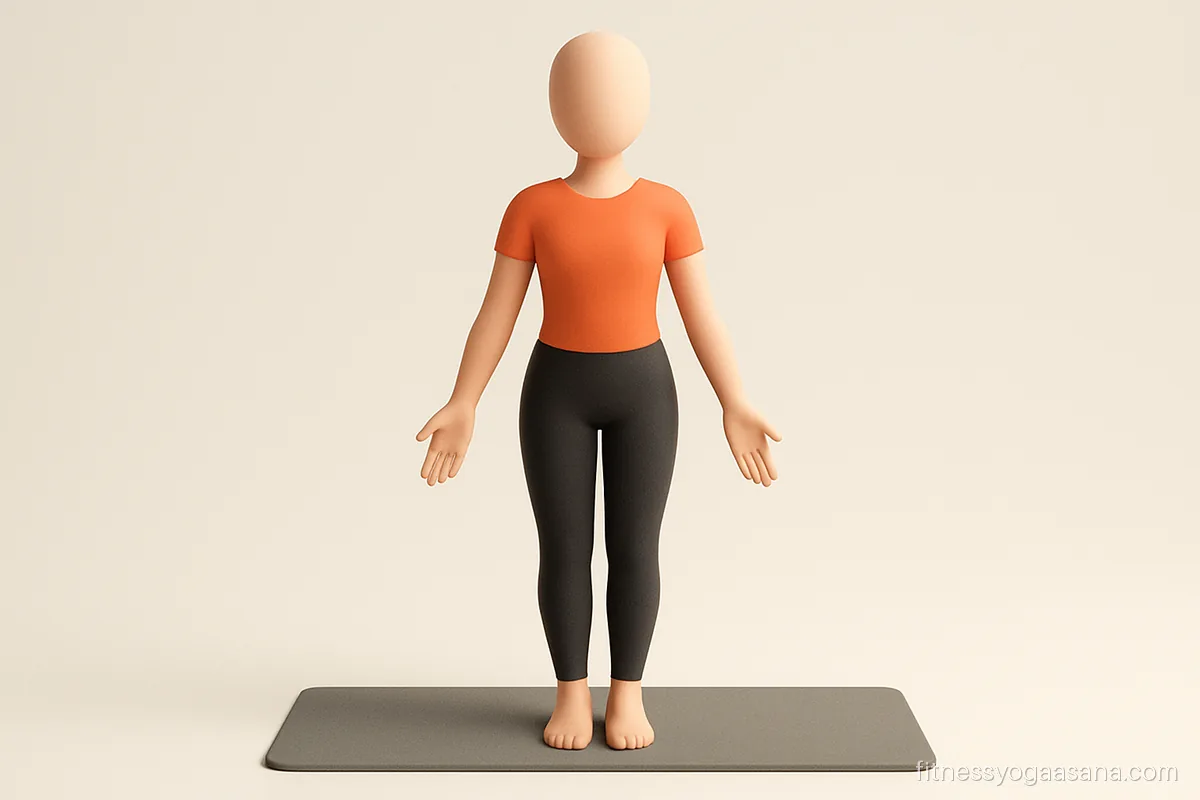
- Level
- Beginner
- Hold
- 5 to 10 breaths
- Works on
- Posture
Mountain pose: feet together or hip width, weight spread evenly, arms relaxed and palms facing the thighs or forward.
Teacher's cue: Lift the kneecaps gently, then let the shoulders drop.

- Level
- Beginner
- Hold
- 3 to 5 breaths
- Works on
- Calves, balance
The palm tree version taught in Indian schools: interlace the fingers, stretch overhead and rise onto the toes.
Teacher's cue: Lift slowly and fix your gaze on one point ahead.

- Level
- Beginner
- Hold
- Setup
- Works on
- Feet, arches
The pose starts at the feet. Spread the toes, then press the big toe base, little toe base and heel down evenly.
Teacher's cue: Imagine four corners under each foot pressing into the floor.

- Level
- Beginner
- Hold
- 1 minute
- Works on
- Posture check
Stand with heels, buttocks and shoulder blades near a wall to feel a neutral, upright posture.
Teacher's cue: Notice whether your head touches the wall without lifting the chin.
Mountain pose yoga names
Tadasana yoga, tad asana, yoga tadasana and tarasana yoga are spellings you will meet. In English: mountain pose yoga, mountain pose in yoga or mountain yoga pose. Some books write mountain pose tadasana yoga or mountain pose yoga tadasana side by side. In ashtanga classes the same stance is often called samasthiti, equal standing. In a mountain pose yoga beginner class, the tadasana yoga pose beginner option is a stance with a little gap between the feet, which feels steadier.
Tadasana yoga steps for the palm tree version
- Stand in mountain pose.
- Interlace the fingers and turn the palms up.
- Inhale and stretch the arms overhead.
- Rise onto the toes, keeping the body straight.
- Hold for a few breaths, gaze steady.
- Exhale and lower the heels and arms slowly.
Repeat three to five times. Children often learn this as the main tadasana in school.
Benefits of tadasana
- Builds awareness of posture and how weight is spread over the feet.
- Strengthens the thighs, ankles and arches, especially in the tiptoe version.
- Trains balance and steady attention.
- Sets up good alignment for tree pose, triangle and every standing pose.
Popular claims that tadasana makes you taller in adulthood are not supported, though better posture can make you stand taller. See yoga for height for details.
Common mistakes
| Mistake | Fix |
|---|---|
| Locked, pushed back knees | Keep a tiny bend and firm the thighs instead |
| Weight in the heels | Shift slightly forward until the toes feel weight too |
| Chest puffed, lower back arched | Lift the lower belly and lengthen the tailbone |
| Chin lifted | Level the chin so the neck is long |
Who should adapt it
Those with low blood pressure or poor balance should stand with feet hip width apart and skip rising onto the toes, or keep a hand near a wall. During pregnancy, a wider stance is more comfortable.
Practise on an empty stomach, move slowly into each position and stop at any sharp pain. If you have an injury, a health condition or are pregnant, check with a doctor or an experienced teacher first.
Questions people ask
What is tadasana called in English?
Mountain pose. In some Indian schools it also means palm tree pose, done on tiptoes with arms raised.
Does tadasana increase height?
It cannot lengthen adult bones. It can improve posture, which helps you stand to your full height.
How long should I hold tadasana?
Five to ten breaths in mountain pose, and three to five breaths on tiptoes, repeated a few times.
Is tadasana good for beginners?
Yes, it is usually the very first pose taught, because it is the base for all standing asanas.
What is the difference between tadasana and samasthiti?
They are almost the same standing position. Samasthiti, equal standing, is the name used in ashtanga yoga.
Practise next
 Vrikshasana (tree)Tree pose: a one leg balance for focus and steadiness
 Standing yoga posesThe main standing asanas with names, pictures and a sequence
 Trikonasana (triangle)Triangle pose: a wide legged side stretch and leg strengthener
 Yoga for heightPosture poses that help you stand tall, and the growth facts
 Surya namaskar stepsAll 12 positions of the sun salutation, with breath and pictures
 Utkatasana (chair)An invisible chair: a strong squat with arms raised
More in yoga poses
 Yoga asanas namesSanskrit and English names of common yoga poses, with pictures
 Bhujangasana (cobra)Cobra pose: a gentle back bend lying on the belly
 Cat cow poseA flowing spine warm up on hands and knees, linked to the breath
 Balasana (child)Child pose: a kneeling forward rest for the back and mind
 Sitting yoga posesSeated asanas for breathing, flexibility and calm, with names
 Butterfly poseSoles together, knees wide: a seated hip opener
 Advanced yoga posesArm balances, inversions and deep bends, with prep poses
 Yoga for flexibilityTen stretching poses and a routine to loosen a stiff body