Vrikshasana: How to Balance in Tree Pose
Yoga poses 4 illustrations Updated 2 Nov 2026
Vrikshasana is the tree pose of yoga: balancing on one foot, you rest the other sole on the inner standing leg and bring the palms together. Vriksha means tree, so the answer to which asana is known as the tree pose is vrikshasana. Think of the supporting leg as a trunk and the lifted arms as its crown.
It is the first balance most people learn. Here are the steps, three levels from wall support to arms overhead, where the foot should and should not go, and tips that make balancing easier.
- Sanskrit
- Vrikshasana (vriksha: tree)
- English
- Tree pose
- Level
- Beginner
- Hold
- 5 to 10 breaths each side
- Foot placement
- Ankle, calf or inner thigh; never on the knee
- Props
- A wall or chair for support
How to do vrikshasana step by step
- Stand in tadasana and shift your weight onto the left foot.
- Bend the right knee and place the right sole on the left ankle, calf or inner thigh.
- Press the foot and leg into each other and keep the hips level.
- Bring the palms together at the chest.
- If steady, raise the arms overhead on an inhale.
- Fix the gaze on one still point. Hold for 5 to 10 breaths.
- Lower slowly and repeat on the other side.
Vrikshasana (tree) in pictures

- Level
- Beginner
- Hold
- 5 to 10 breaths
- Works on
- Balance, focus
The classic shape: the sole presses into the inner thigh, the thigh presses back, and the palms rest together at the chest.
Teacher's cue: Let the sole and the inner thigh push against each other with equal force.
- Level
- Beginner plus
- Hold
- 5 breaths
- Works on
- Balance, shoulders
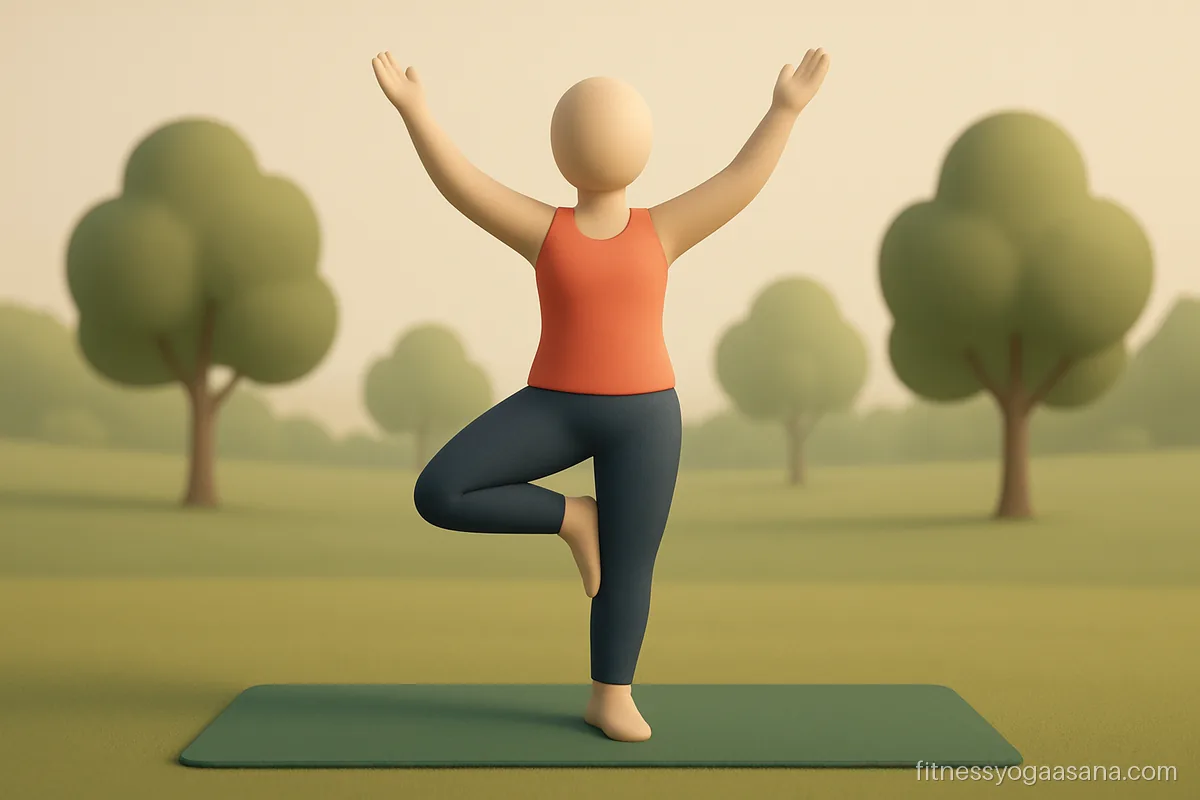
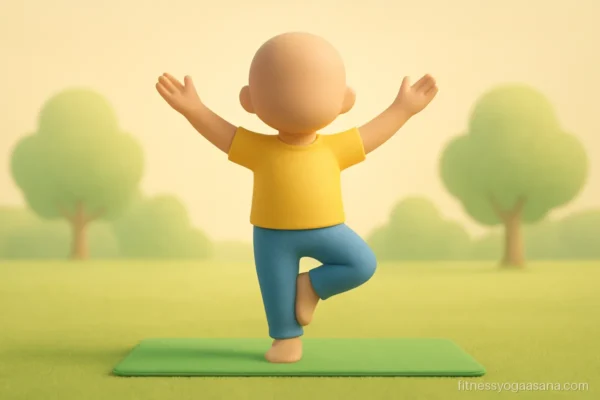
Raise the arms only when the lower body feels steady. Wide arms are easier to balance than joined palms.
Teacher's cue: Feel the standing foot grow heavier as the hands lift.
- Level
- Beginner
- Hold
- 5 breaths
- Works on
- Balance
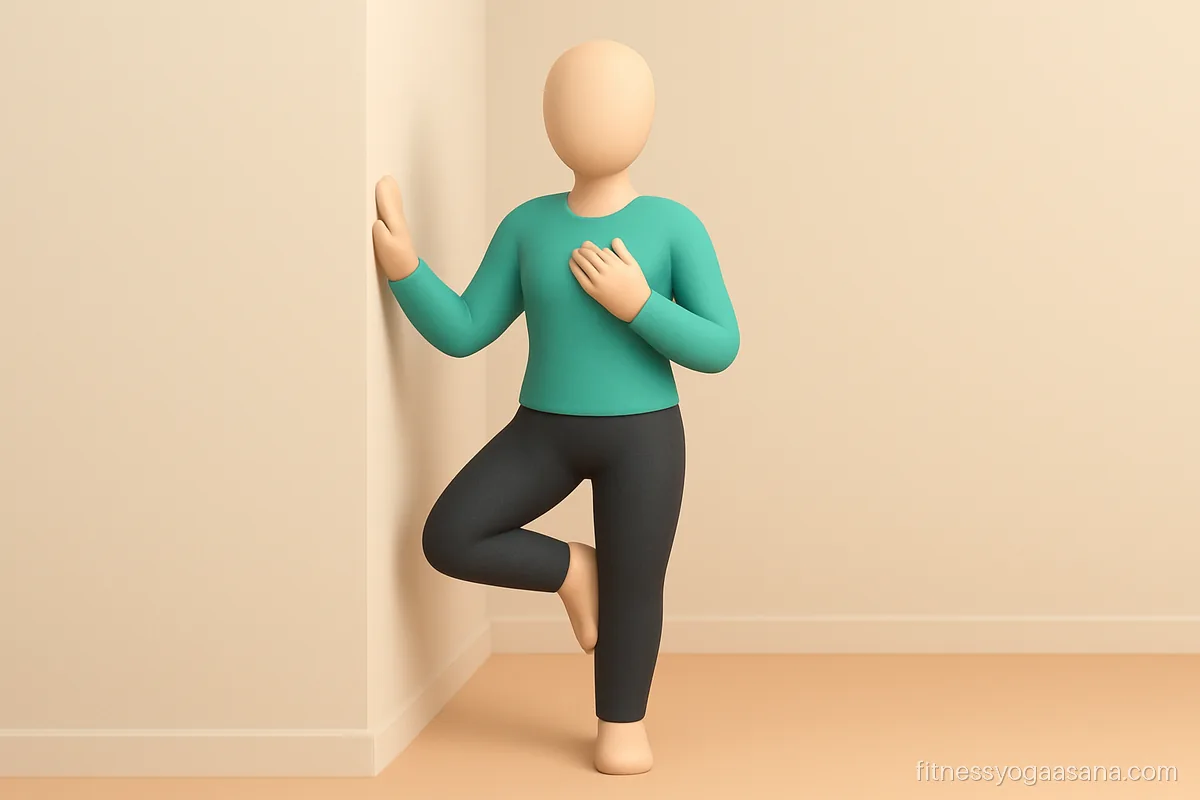
Beginners can rest the foot on the calf and keep one hand on a wall. This is still a full tree pose.
Teacher's cue: Lighten the hand on the wall as you grow steadier.

- Level
- All levels
- Hold
- 5 to 10 breaths
- Works on
- Ankle stability
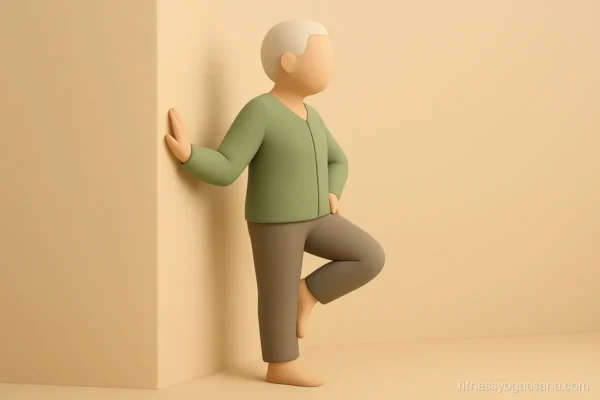
The kickstand version: heel against the ankle, toes on the floor. Ideal for older practitioners and first attempts.
Teacher's cue: Keep the hips level and the standing knee soft.
Vrikshasana yoga names and searches
Tree pose yoga, yoga tree pose, tree yoga pose and tree pose in yoga all point to vrikshasana yoga. The Hindi spelling vriksh asana and the label vrikshasana tree pose yoga are also common, and charts may say tree pose asana. School quizzes ask which asana is known as the tree pose or which asana is known as tree pose; the answer is vrikshasana. A tree pose yoga beginner practises the wall version, and tree pose yoga balance improves within a couple of weeks of daily practice.
Where the foot goes, and where it does not
Rest the sole higher or lower than the knee joint; pushing straight into the side of the knee twists it in a way it does not like. If the foot slips on the thigh, roll the leggings up or rest the foot on the calf instead.
Tips for steadier balance
- Look at a fixed point at eye level, not at moving things.
- Grip the floor lightly with the toes of the standing foot.
- Firm the standing thigh and keep a soft bend in that knee.
- Breathe slowly; holding the breath makes you wobble.
- Expect to sway. Small movements are how balance trains itself.
Tree pose yoga benefits
- Improves balance and ankle stability, valuable as we age.
- Strengthens the standing leg and foot muscles.
- Opens the hip of the bent leg.
- Trains concentration; many teachers use it to calm a restless group.
It is a staple of yoga for kids and yoga for seniors alike, with suitable support.
Common mistakes
| Mistake | Fix |
|---|---|
| Foot pressing on the knee | Move it to the calf or thigh |
| Hip of the standing leg sticking out | Draw it in so the hips stay level |
| Leaning toward the bent leg | Stack the shoulders over the standing hip |
| Locked standing knee | Keep a micro bend |
People with vertigo, ankle injuries or very low blood pressure should practise next to a wall.
Practise on an empty stomach, move slowly into each position and stop at any sharp pain. If you have an injury, a health condition or are pregnant, check with a doctor or an experienced teacher first.
Questions people ask
Which asana is known as the tree pose?
Vrikshasana. Vriksha means tree in Sanskrit.
How long should I hold vrikshasana?
Five to ten breaths on each side, building toward 30 to 60 seconds.
Why do I lose balance in tree pose?
Common reasons are a moving gaze, a locked knee, holding the breath or tiredness. Use a wall and practise daily.
Can I put my foot on my knee in tree pose?
No. Place it above or below the knee to protect the joint.
Is vrikshasana good for children?
Yes. Children usually love it and treat it as a game of who can stay still longest.
Practise next
 Tadasana (mountain)Mountain pose: the standing base for every other asana
 Standing yoga posesThe main standing asanas with names, pictures and a sequence
 Warrior poseThree strong standing poses for legs, hips and balance
 Yoga for kidsEasy, playful poses and breathing games for children
 Yoga for seniorsBalance, strength and mobility for older adults
 Balasana (child)Child pose: a kneeling forward rest for the back and mind
More in yoga poses
 Yoga asanas namesSanskrit and English names of common yoga poses, with pictures
 Bhujangasana (cobra)Cobra pose: a gentle back bend lying on the belly
 Cat cow poseA flowing spine warm up on hands and knees, linked to the breath
 Sitting yoga posesSeated asanas for breathing, flexibility and calm, with names
 Butterfly poseSoles together, knees wide: a seated hip opener
 Advanced yoga posesArm balances, inversions and deep bends, with prep poses
 Yoga for flexibilityTen stretching poses and a routine to loosen a stiff body
 Setu bandhasana (bridge)Hips lifted from the floor: a gentle back bend and glute builder