Aerial Yoga: Yoga in a Hanging Hammock
Styles of yoga 3 illustrations Updated 2 Nov 2026
Aerial yoga is practised with a soft fabric hammock hung from the ceiling, about hip height from the floor. The hammock supports part of your weight, so you can try inversions, deep stretches and balances that are hard on a mat. It is sometimes called anti gravity yoga or air yoga, and people often misspell it ariel yoga.
This page explains how classes work, typical aerial yoga poses, the benefits people report, who should not try it, and how to start safely with a trained teacher.
- Equipment
- Fabric hammock rigged to a ceiling beam
- Also called
- Anti gravity yoga, air yoga
- Class length
- 60 to 75 minutes
- Good for
- Fun, strength, supported inversions
- Learn with
- A trained teacher and proper rigging
- Avoid if
- Pregnancy, glaucoma, high BP, vertigo
What is aerial yoga?
Aerial yoga blends ordinary yoga poses with moves borrowed from aerial dance. The hammock acts like a sling: it can support your hips for an inversion, your back for a stretch, or your feet for a plank. Because it takes some weight off the joints, poses like downward dog and back bends can feel different and sometimes easier. Classes usually start on the floor, move into the hammock for standing and hanging poses, and end with relaxation.
Aerial yoga in pictures
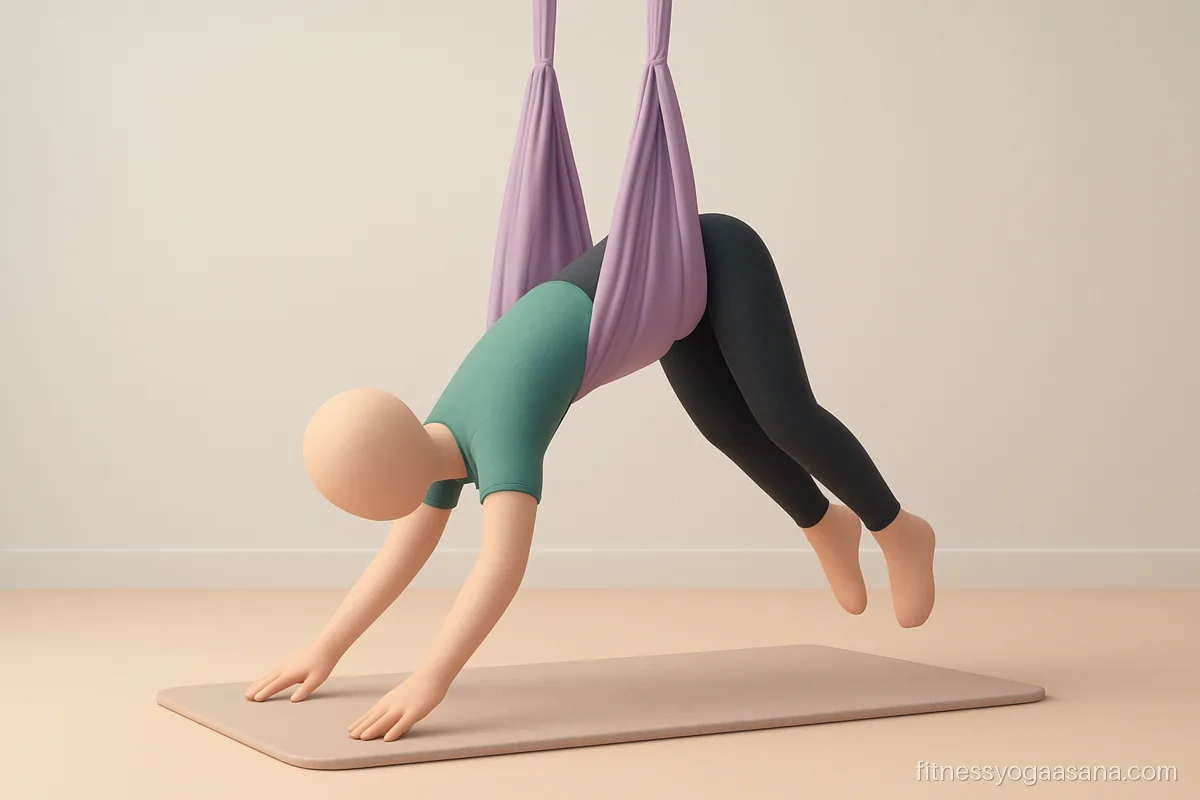
- Level
- Intermediate
- Hold
- 30 to 60 seconds
- Works on
- Spine, shoulders
The hammock under the hips lets you hang upside down without weight on the head or neck. Learn it only with a teacher.
Teacher's cue: Wrap the legs around the fabric before you let go with the hands.

- Level
- All levels
- Hold
- 3 to 5 minutes
- Works on
- Rest
Many classes end with a cocoon: lying inside the hammock as if in a swing.
Teacher's cue: Let the fabric hold all your weight and close the eyes.

- Level
- Beginner
- Hold
- 5 breaths
- Works on
- Chest, shoulders
The fabric behind the upper back supports a gentle standing back bend.
Teacher's cue: Hold the fabric firmly at chest height and lean back slowly.
Aerial yoga poses you will meet
- Supported downward dog: hips resting in the fabric, hands on the floor.
- Hanging inversion: the fabric under the hips, legs wrapped, head down.
- Standing back bend: fabric behind the upper back.
- Aerial plank: feet in the fabric, hands on the floor.
- Cocoon: lying inside the fabric for rest.
Teachers adapt mat poses like warrior and pigeon to the hammock as well.
Benefits of aerial yoga
People enjoy the playful feeling and the novelty of hanging upside down. Gripping and supporting your weight builds grip, arm and core strength. The support can make deep stretches accessible. A small study found aerial yoga classes gave a moderate workout similar to other fitness classes. Many people report that supported inversions feel freeing for the back, though evidence for spinal benefits is limited.
What an aerial yoga class feels like
Expect to spend the first class learning how to sit in, lean on and wrap the fabric. The hammock sways, so movements are slow at first and teachers adjust its height for each student. Your hands and the backs of your knees may feel tender where the fabric grips; this eases with practice. Many people laugh a lot in their first session, which is part of the appeal.
Who should not try aerial yoga
Avoid aerial yoga in pregnancy, with glaucoma or recent eye surgery, high or low blood pressure, heart disease, vertigo or inner ear problems, recent head injury, osteoporosis, or recent surgery. Hanging upside down is also unsuitable after a heavy meal. If you feel dizzy, sick or tingly in the hammock, come up slowly and sit.
How to start safely
- Choose a studio with trained teachers and professionally rigged hammocks.
- Tell the teacher about any health conditions.
- Take a beginner class before any open level class.
- Do not install a hammock at home without a professional checking the ceiling and fittings.
- Build a base of regular mat practice from yoga for beginners.
Compare other styles on types of yoga.
Practise on an empty stomach, move slowly into each position and stop at any sharp pain. If you have an injury, a health condition or are pregnant, check with a doctor or an experienced teacher first.
Questions people ask
What is aerial yoga?
Yoga practised with a fabric hammock that supports part of your weight, allowing inversions and deep stretches.
Is ariel yoga the same as aerial yoga?
Yes, ariel is a common misspelling of aerial.
Is aerial yoga good for beginners?
Yes, in a beginner class with a trained teacher. Healthy beginners often find it fun and accessible.
Does aerial yoga help back pain?
Some people find supported inversions relieving, but evidence is limited. Ask your doctor first if you have back problems.
Can I do aerial yoga at home?
Only with professionally installed rigging. A badly fitted hammock is dangerous.
Practise next
 Types of yogaThe classic paths, modern styles and families of yoga asanas
 Couple yoga posesPartner and group poses for couples, friends and challenges
 Advanced yoga posesArm balances, inversions and deep bends, with prep poses
 Power yogaA fitness focused flowing style, with a home workout
 Yoga for flexibilityTen stretching poses and a routine to loosen a stiff body
More in styles of yoga
 Hatha yogaThe classic body and breath branch of yoga, explained simply
 Ashtanga yogaTwo meanings: Patanjali's path and the vigorous vinyasa series
 Kriya yogaPatanjali's yoga of action and the later breath meditation path
 Kundalini yogaBreath, movement, sound and meditation aimed at inner energy
 Hot yogaYoga in a heated room: how it works, benefits and risks
 Yin yogaLong, passive floor holds, and how restorative yoga differs
 Vinyasa yogaBreath linked flowing sequences, with a home flow
 Karma yogaThe yoga of action done well, without clinging to rewards