Pigeon Pose Yoga: A Deep Hip Stretch Done Safely
Yoga poses 4 illustrations Updated 2 Nov 2026
Pigeon pose yoga is a deep hip opener in which one leg is folded in front of the body and the other stretches straight back. It targets the outer hip and buttock of the front leg and the hip flexor of the back leg. In Sanskrit the preparatory version is often called eka pada rajakapotasana prep or simply kapotasana prep; kapota means pigeon. The full pose adds a back bend with the back foot drawn toward the head, which is advanced.
This guide focuses on the version most people practise, how to protect the knee with props, the reclined figure four alternative, what the pose does and does not do, and when another stretch is the wiser pick.
- Sanskrit
- Eka pada rajakapotasana (prep)
- English
- Pigeon pose, half pigeon
- Level
- Intermediate
- Hold
- 1 to 3 minutes a side
- Props
- Block or cushion under the front hip
- Alternative
- Reclined figure four
How to do pigeon pose yoga
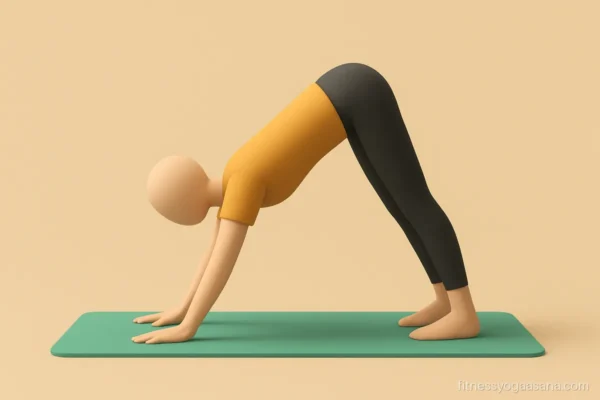
- Start in downward dog or on hands and knees.
- Bring the right knee forward behind the right wrist.
- Place the right shin on the mat, the foot somewhere in front of the left hip; it does not need to be parallel to the front of the mat.
- Slide the left leg straight back, top of the foot on the floor.
- Place a block or folded blanket under the right buttock if the hip floats.
- Walk the hands beside the hips and lift the chest for a few breaths.
- If comfortable, fold forward onto the forearms or a block.
- Stay one to three minutes, then press back and switch sides.
Pigeon pose in pictures
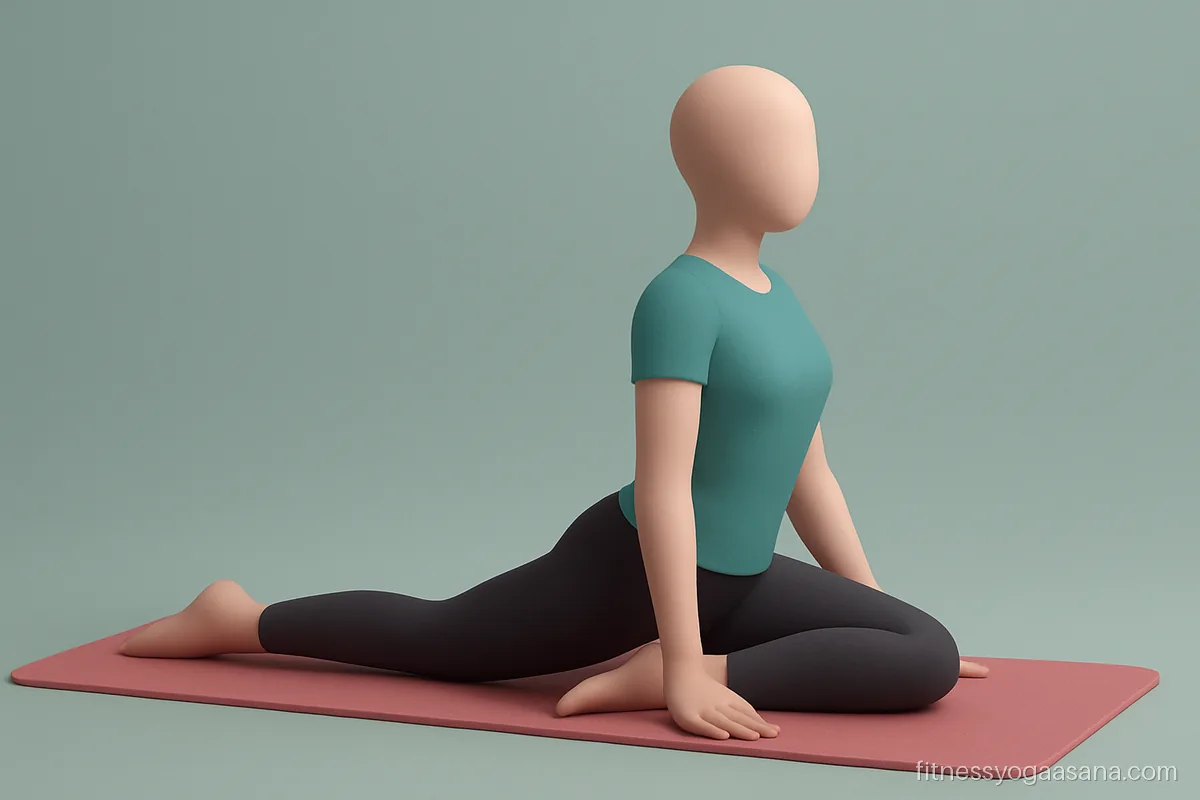
- Level
- Intermediate
- Hold
- 5 breaths
- Works on
- Outer hip, hip flexor
Upright pigeon with the hands pressing down keeps the spine long and gives you control of the stretch.
Teacher's cue: Square the hips toward the front of the mat.
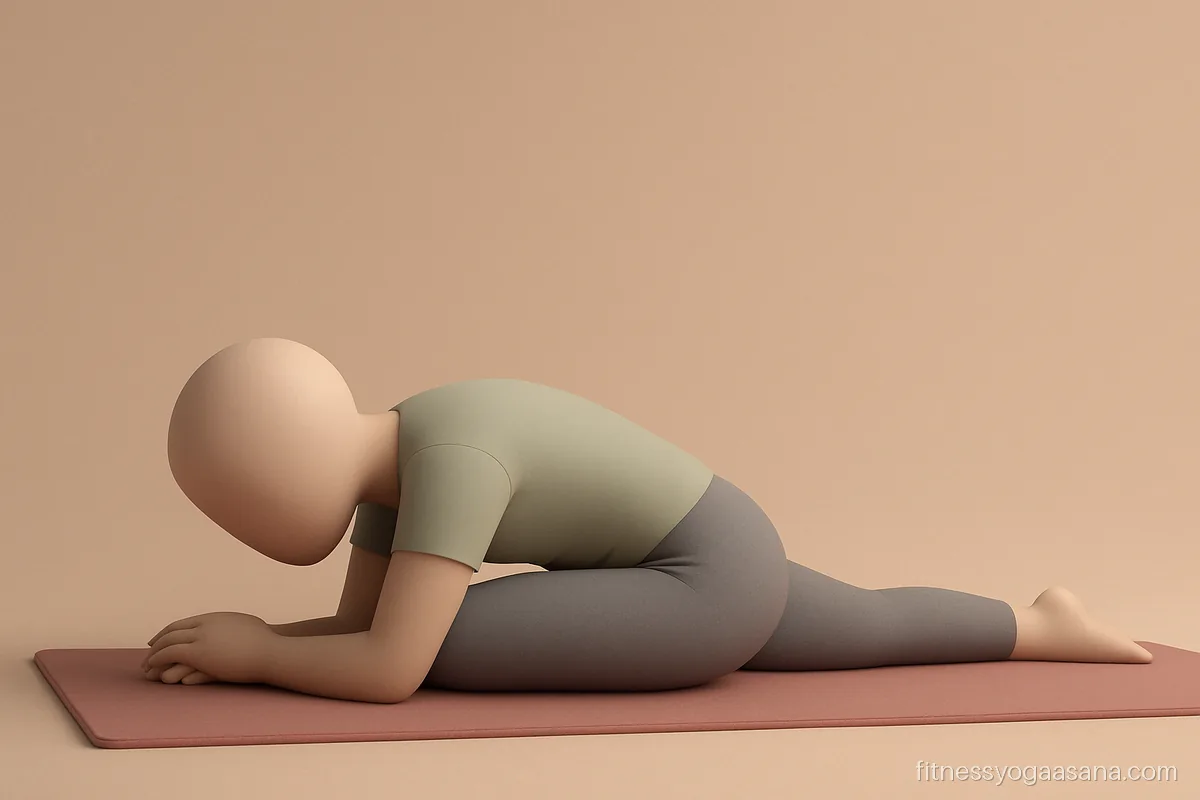
- Level
- Intermediate
- Hold
- 1 to 3 minutes
- Works on
- Outer hip
Folding forward over the front leg deepens the outer hip stretch. Rest the head on stacked hands or a block.
Teacher's cue: Breathe into the stretch rather than pushing deeper.
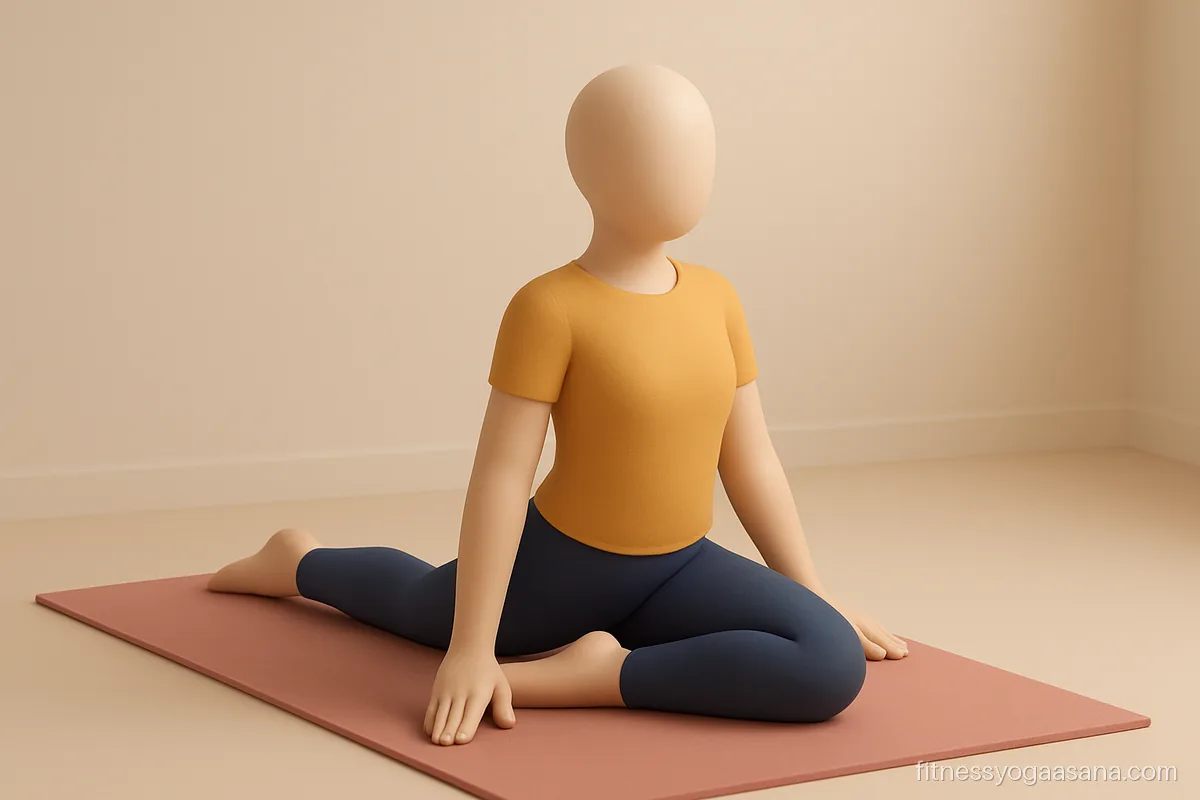
- Level
- Beginner
- Hold
- 1 to 2 minutes
- Works on
- Hip support
A block or folded blanket under the front hip stops the pelvis tipping and protects the knee.
Teacher's cue: Add height until the hips feel level.

- Level
- All levels
- Hold
- 1 minute a side
- Works on
- Outer hip
The reclined figure four gives a similar stretch without putting weight on the knee.
Teacher's cue: Flex the crossed foot to protect the knee.
Protecting the knee
Knees bend and straighten well but cope badly with rotation while loaded. If the hip is tight, the body twists at the knee instead, which can strain it. Keep the front foot flexed, bring the front heel closer to the groin rather than forcing the shin parallel, and use a prop under the hip so the pelvis stays level. Any sharp sensation in the knee means stop and use the reclined figure four instead.
The reclined figure four
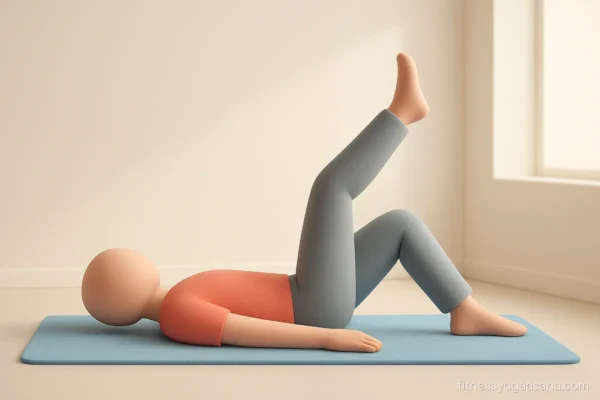
Lie on the back with both knees bent. Cross the right ankle over the left knee. Thread the right hand between the legs and clasp both hands behind the left thigh. Draw the left thigh toward the chest until you feel a stretch in the right outer hip. Hold a minute, then switch. This option, sometimes called eye of the needle, suits beginners, people with knee concerns and practice in bed.
What pigeon pose does
- Stretches the outer hip rotators, including the piriformis, of the front leg.
- Stretches the hip flexor of the back leg.
- Many runners, cyclists and people who sit a lot find it relieves hip tightness.
- The folded version is calming for many people.
The popular claim that hips store emotions is a teaching metaphor. Strong stretches can bring up feelings because they are uncomfortable to stay in, not because emotions are stored in muscle.
Who should choose another stretch
Choose the reclined figure four if you have knee pain or a knee injury, sacroiliac joint pain, recent hip surgery or replacement, or in later pregnancy. Ask your doctor or physiotherapist about hip stretches after a replacement, since some movements are restricted. Anyone with sciatica should ease in gently and stop if leg symptoms increase. See yoga for knee pain for knee friendly practice.
Placing pigeon in your practice
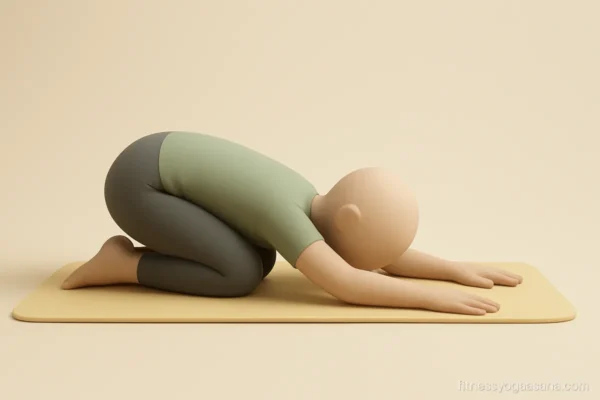
Place pigeon after the body is warm, for example after standing poses or sun salutations. Follow it with a gentle twist and a few breaths in child pose. For more hip opening ideas see butterfly pose and yoga for flexibility.
Practise on an empty stomach, move slowly into each position and stop at any sharp pain. If you have an injury, a health condition or are pregnant, check with a doctor or an experienced teacher first.
Questions people ask
What is pigeon pose in Sanskrit?
The common version is the preparation for eka pada rajakapotasana, the one legged king pigeon.
Why does pigeon pose hurt my knee?
Usually the hip is too tight, so the knee twists. Use a block under the hip, bring the heel closer to the groin, or try reclined figure four.
How long should I hold pigeon pose?
One to three minutes on each side, breathing slowly.
Is pigeon pose good for sciatica?
It can help some people with tight hip muscles. Stop if leg pain, tingling or numbness increase.
What is a good alternative to pigeon pose?
The reclined figure four, lying on the back with one ankle over the opposite knee.
Practise next
 Butterfly poseSoles together, knees wide: a seated hip opener
 Yoga for flexibilityTen stretching poses and a routine to loosen a stiff body
 Yoga for knee painKnee friendly strength and mobility, with poses to adapt
 Downward dogThe inverted V: hips high, heels reaching, spine long
 Balasana (child)Child pose: a kneeling forward rest for the back and mind
 Malasana (garland)Garland pose: a deep squat with palms together at the chest
More in yoga poses
 Yoga asanas namesSanskrit and English names of common yoga poses, with pictures
 Bhujangasana (cobra)Cobra pose: a gentle back bend lying on the belly
 Standing yoga posesThe main standing asanas with names, pictures and a sequence
 Cat cow poseA flowing spine warm up on hands and knees, linked to the breath
 Sitting yoga posesSeated asanas for breathing, flexibility and calm, with names
 Tadasana (mountain)Mountain pose: the standing base for every other asana
 Vrikshasana (tree)Tree pose: a one leg balance for focus and steadiness
 Advanced yoga posesArm balances, inversions and deep bends, with prep poses