Plank Pose Yoga and Chaturanga Done Right
Yoga poses 4 illustrations Updated 2 Nov 2026
Plank pose yoga holds the body in one straight line from head to heels, supported on the hands and toes, like the top of a push up. In Sanskrit it is sometimes called phalakasana, phalaka meaning plank. It builds core, shoulder and arm strength and forms the bridge to chaturanga asana, the low push up that appears in many sun salutation sequences.
Done carelessly, chaturanga is a frequent cause of sore shoulders in yoga. This page covers how to hold plank well, how to lower into chaturanga safely, progressions from the knees, forearm plank, how long to hold, and the mistakes worth fixing early.
- Sanskrit
- Phalakasana; chaturanga dandasana
- English
- Plank pose; four limbed staff pose
- Level
- Beginner (plank); intermediate (chaturanga)
- Hold
- 20 to 60 seconds
- Works
- Core, shoulders, arms, chest
- Easier option
- Knees down
How to do plank pose yoga
- Begin on all fours, wrists stacked beneath the shoulders.
- Fan the fingers wide and ground every knuckle.
- Step the feet back one at a time, toes tucked.
- Tone the abdomen and reach the tailbone toward the heels.
- Keep the neck long, gaze slightly ahead of the hands.
- Breathe steadily for 20 to 60 seconds.
- Lower the knees to rest.
Plank pose in pictures
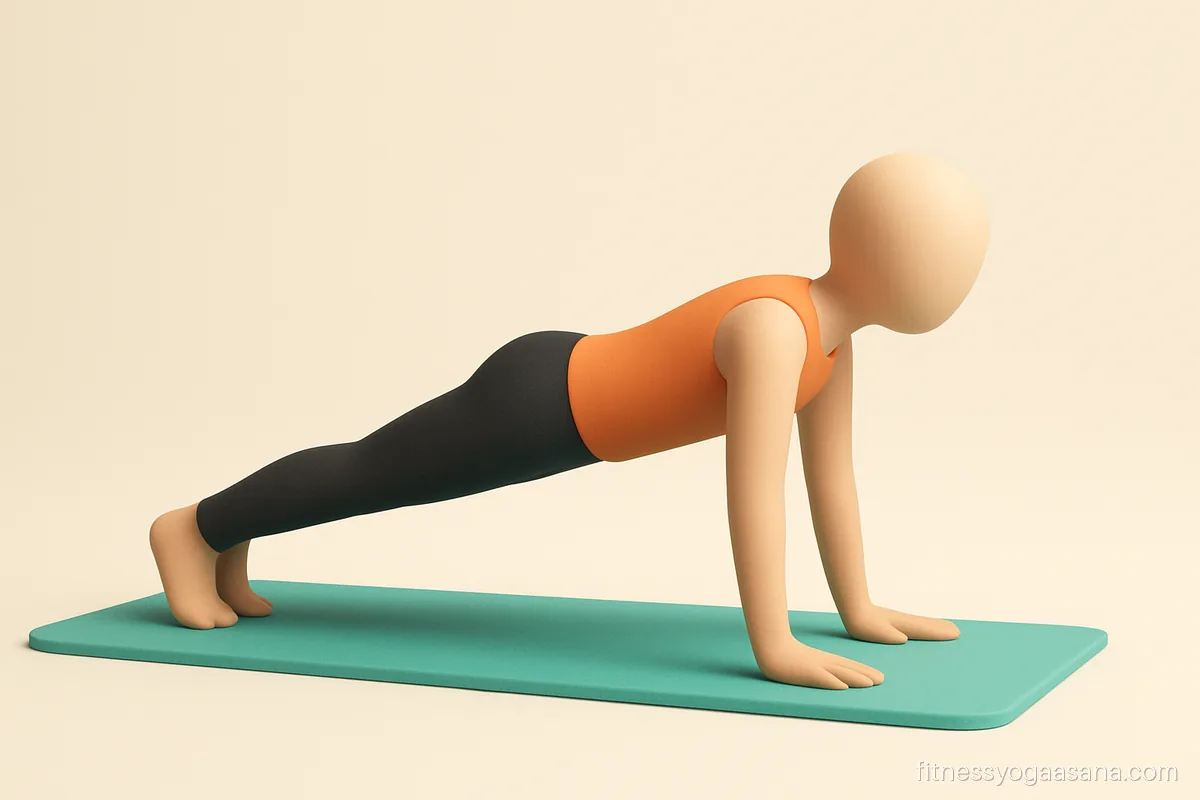
- Level
- Beginner
- Hold
- 20 to 60 seconds
- Works on
- Core, shoulders
Hands under shoulders, heels pressing back, and a straight line from crown to heels.
Teacher's cue: Push the floor away so the upper back stays broad.
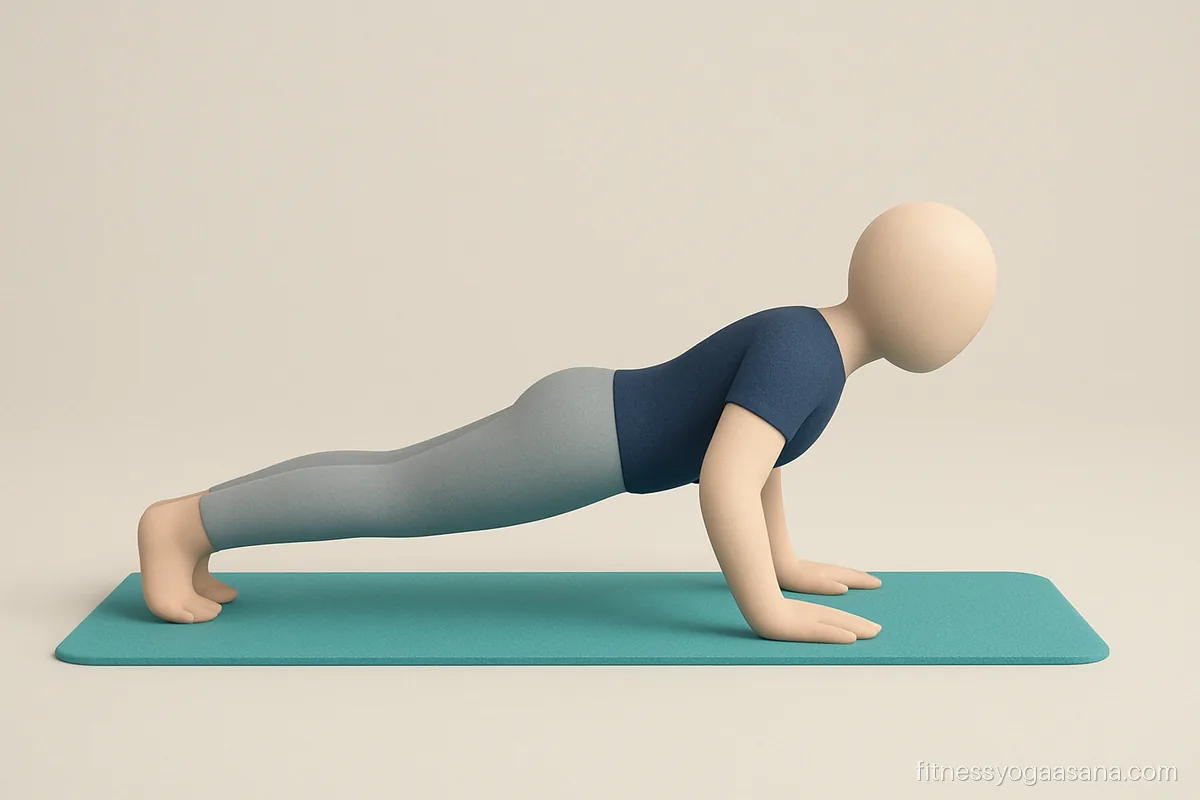
- Level
- Intermediate
- Hold
- 1 to 3 breaths
- Works on
- Arms, chest
In chaturanga the elbows stop at shoulder height and stay close to the ribs.
Teacher's cue: Shift forward onto the toes before you lower.
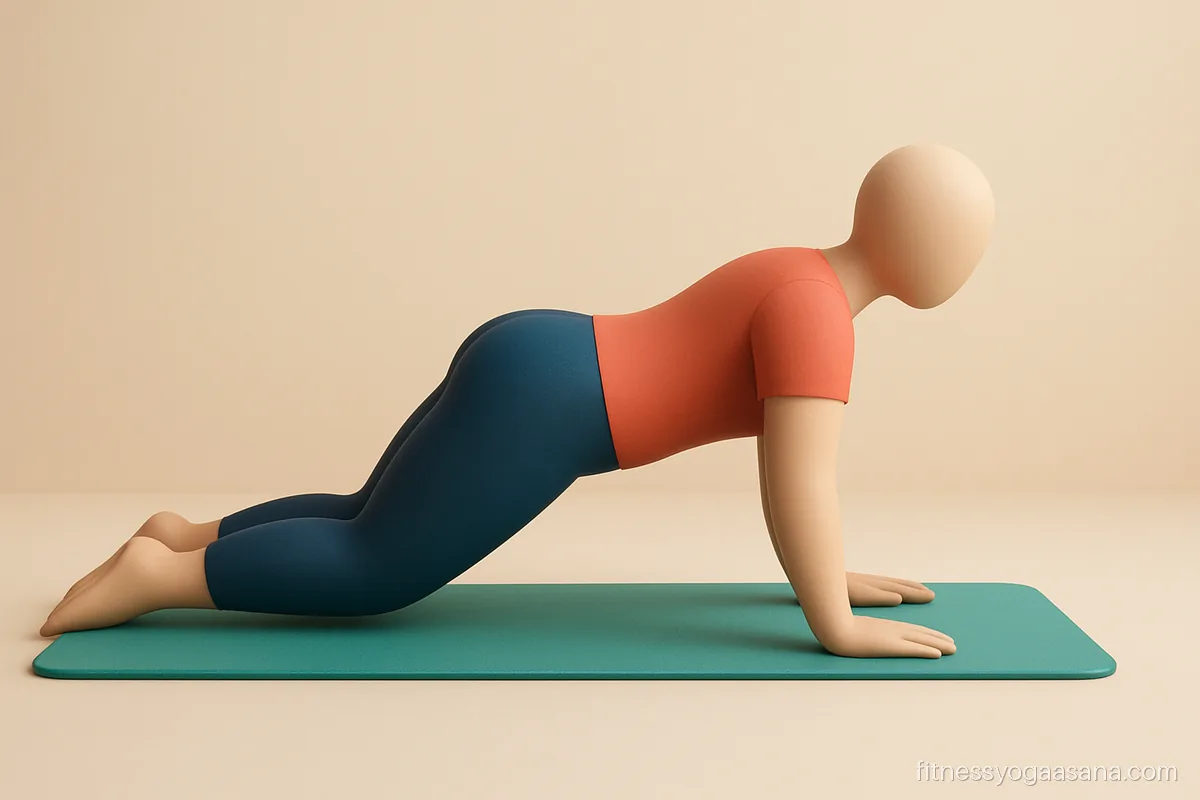
- Level
- Beginner
- Hold
- 20 to 40 seconds
- Works on
- Core basics
Knees down keeps all the alignment cues while reducing the load.
Teacher's cue: Hold the pelvis level between shoulders and knees.
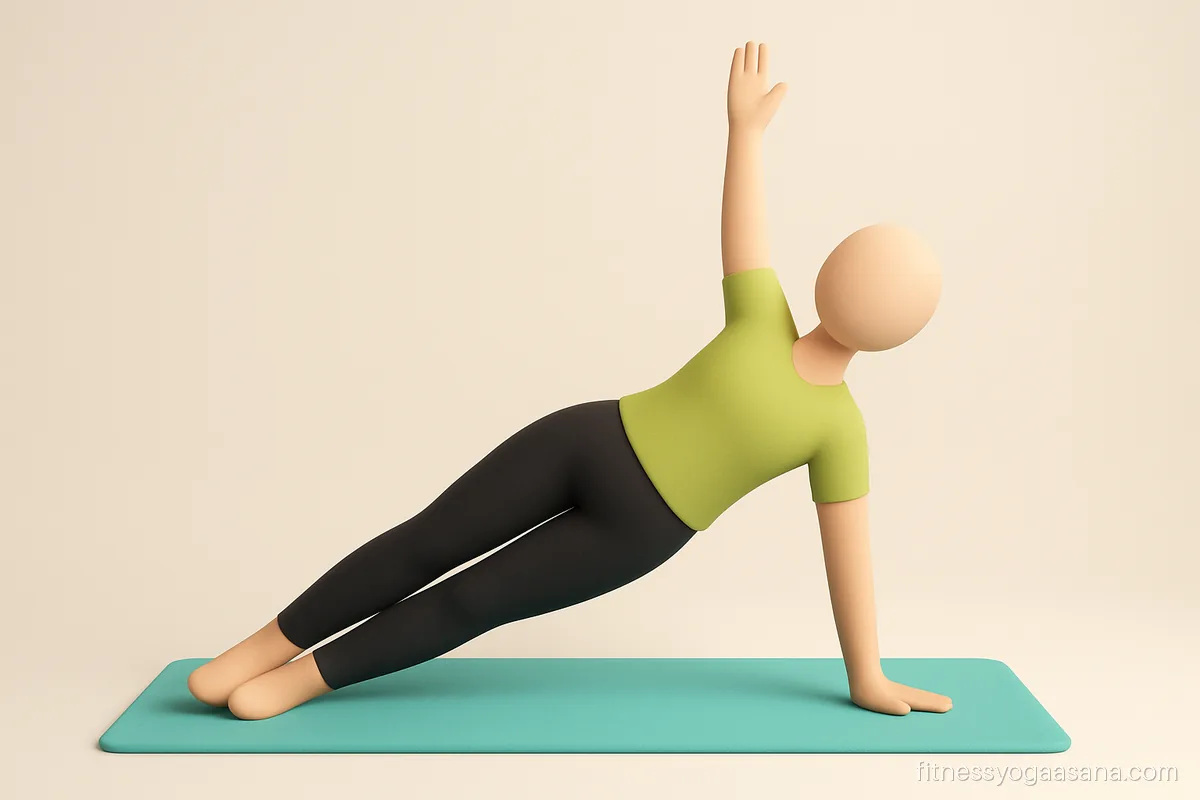
- Level
- Intermediate
- Hold
- 3 to 5 breaths a side
- Works on
- Obliques, shoulders
Side plank, vasisthasana, works the sides of the waist and the shoulders.
Teacher's cue: Lift the hips so the body forms one plane.
How to do chaturanga asana safely
- From plank, shift forward so the shoulders move slightly past the wrists.
- Bend the elbows straight back, hugging them to the ribs.
- Lower until the shoulders are level with the elbows, no lower.
- Keep the body straight and the chest broad.
- Either lower all the way to the floor or press into upward dog.
If the shoulders dip below the elbows, the front of the shoulder takes a heavy load. Stop higher, or lower with the knees down.
Progressions
| Stage | Practice |
|---|---|
| 1 | Knees down plank, 3 holds of 20 seconds |
| 2 | Forearm plank, 3 holds of 30 seconds |
| 3 | Full plank, 3 holds of 30 to 60 seconds |
| 4 | Knees down chaturanga, 5 slow lowers |
| 5 | Full chaturanga, 3 slow lowers |
Common mistakes
- Sagging hips: pull the belly in and press the heels back.
- Hips piked up: lower until the body is straight.
- Shoulders hunched to the ears: push the floor away.
- Elbows flaring in chaturanga: hug them in.
- Holding the breath: breathe through the nose steadily.
Benefits and cautions
Plank builds the deep core muscles that support the spine, along with the shoulders, arms and chest. It is part of plans for belly fat and back support. Avoid it or use the forearm version with wrist pain; skip it with recent shoulder injury, and in later pregnancy or with diastasis recti ask a physiotherapist about safe core work.
In sun salutation
In many surya namaskar steps, plank is followed by chaturanga or by knees, chest and chin to the floor. Searches for chaturanga yoga often come from this context. Learn plank first, then practise lowering slowly before linking it into flowing sequences such as vinyasa.
Forearm plank
Forearm plank places the elbows under the shoulders and the forearms parallel on the mat. It takes the load off the wrists and is often easier for the shoulders, while the core works just as hard. Clasp the hands or keep them apart, whichever feels steadier. It is a good choice for people with wrist pain, and a useful finisher at the end of a strength session.
Practise on an empty stomach, move slowly into each position and stop at any sharp pain. If you have an injury, a health condition or are pregnant, check with a doctor or an experienced teacher first.
Questions people ask
How long should I hold plank pose?
Start with twenty seconds and build up to a minute, with good form throughout.
What is chaturanga asana?
The low push up position, with elbows bent to ninety degrees and the body straight just above the floor.
Why does chaturanga hurt my shoulders?
Usually the shoulders drop below the elbows. Stop higher or lower with the knees down.
Is plank good for back pain?
Building core strength helps many people. Start with knees down and stop if pain increases.
Can I do plank with weak wrists?
Use forearm plank, which takes the load off the wrists.
Practise next
 Surya namaskar stepsAll 12 positions of the sun salutation, with breath and pictures
 Vinyasa yogaBreath linked flowing sequences, with a home flow
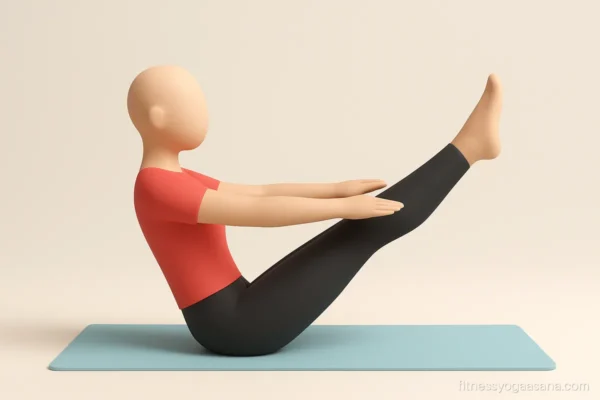 Naukasana (boat)Boat pose: balance on the sit bones with legs and chest lifted
 Yoga for belly fatCore poses, a daily plan and honest advice on waist fat
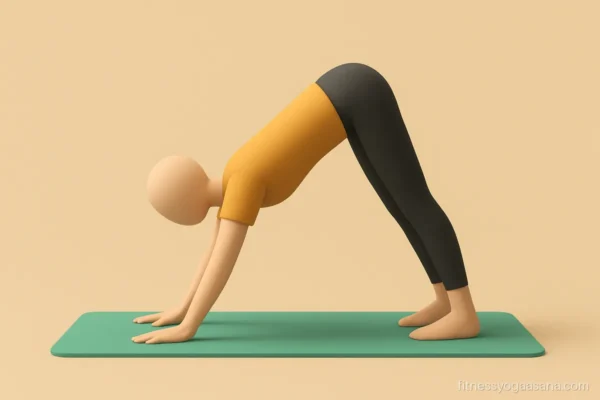 Downward dogThe inverted V: hips high, heels reaching, spine long
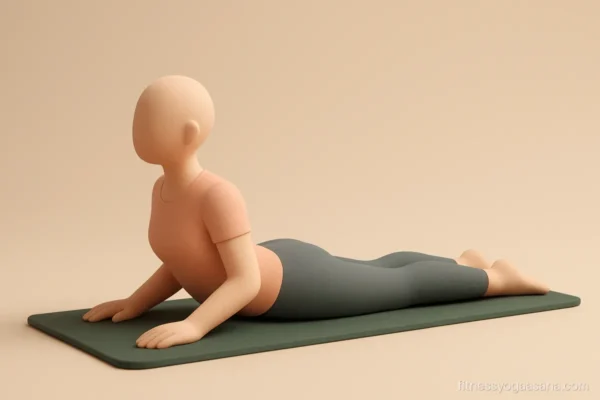 Bhujangasana (cobra)Cobra pose: a gentle back bend lying on the belly
More in yoga poses
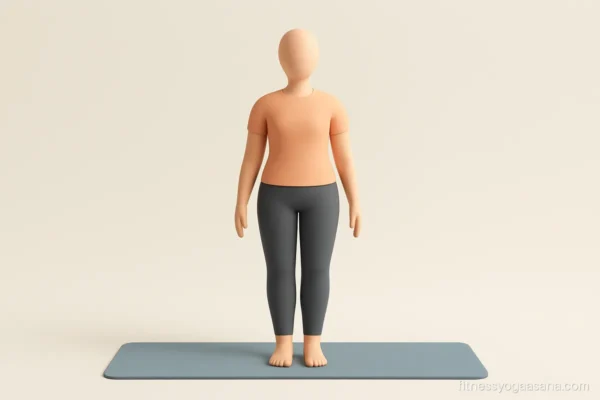 Yoga asanas namesSanskrit and English names of common yoga poses, with pictures
 Standing yoga posesThe main standing asanas with names, pictures and a sequence
 Cat cow poseA flowing spine warm up on hands and knees, linked to the breath
 Balasana (child)Child pose: a kneeling forward rest for the back and mind
 Sitting yoga posesSeated asanas for breathing, flexibility and calm, with names
 Butterfly poseSoles together, knees wide: a seated hip opener
 Tadasana (mountain)Mountain pose: the standing base for every other asana
 Vrikshasana (tree)Tree pose: a one leg balance for focus and steadiness