Makarasana: Crocodile Pose for Rest and Breath
Yoga poses 4 illustrations Updated 2 Nov 2026
Makarasana, the crocodile pose, is a relaxation posture done lying on the belly. The forearms are folded under the forehead or the chin rests on stacked hands, the legs lie apart with the heels turned in or out, and the whole body rests on the floor. Makara means crocodile, an animal that lies still and calm at the water's edge. It is the face down counterpart to shavasana and is often used between back bends such as cobra and locust.
This guide explains how to set up makarasana, how it teaches belly breathing, variations that ease the lower back, the benefits, and when another rest may be more comfortable.
- Sanskrit
- Makarasana (makara: crocodile)
- English
- Crocodile pose
- Level
- All levels
- Hold
- 1 to 5 minutes
- Teaches
- Relaxed belly breathing
- Used between
- Cobra, locust, bow pose
How to do makarasana
- Lie face down on the mat.
- Spread the legs comfortably apart.
- Turn the heels in and toes out, or the reverse, whichever relaxes the hips.
- Fold the arms and stack the forearms under the forehead.
- Close the eyes and let the whole body rest on the floor.
- Breathe slowly through the nose, feeling the belly press into the mat.
- Stay one to five minutes, then bring the legs together and roll to one side.
Makarasana (crocodile) in pictures

- Level
- All levels
- Hold
- 1 to 5 minutes
- Works on
- Rest, breath
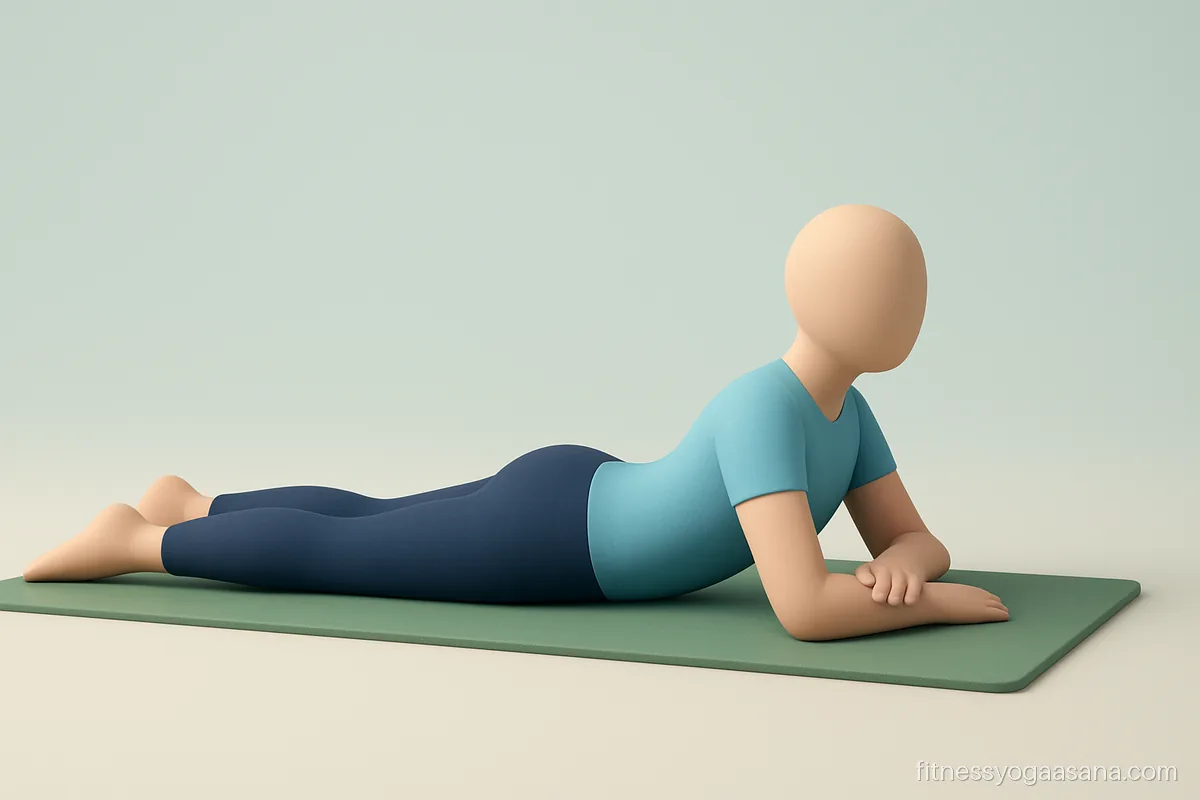
Fold the arms and rest the forehead on them; legs apart, heels turned in or out, whichever is comfortable.
Teacher's cue: Let the belly press into the floor as you inhale.
- Level
- All levels
- Hold
- 1 to 3 minutes
- Works on
- Gentle back extension
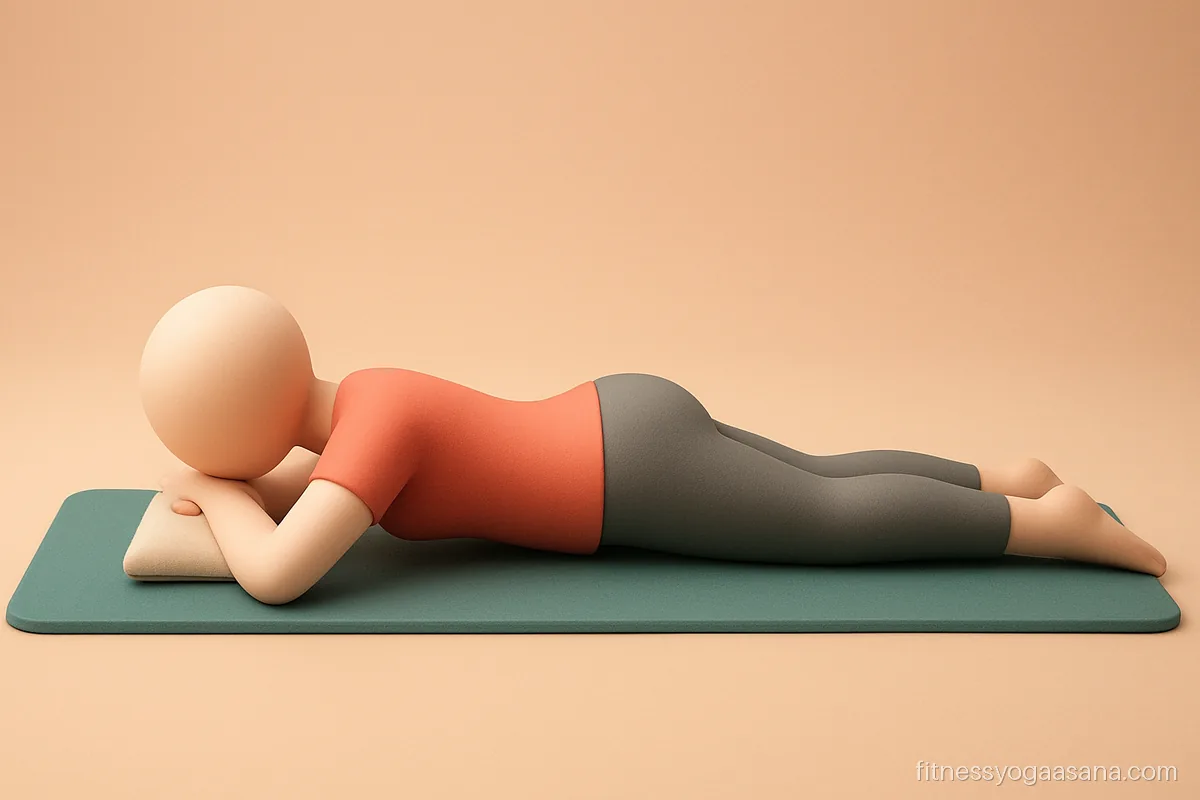
Resting the chin on stacked hands lifts the chest slightly and gives a gentle back bend.
Teacher's cue: Move the elbows forward if the lower back feels pinched.
- Level
- All levels
- Hold
- 3 to 5 minutes
- Works on
- Back comfort
A thin pillow under the belly flattens the curve of the lower back for those who find lying flat uncomfortable.
Teacher's cue: Use the thinnest support that removes discomfort.

- Level
- Beginner
- Hold
- 5 breaths
- Works on
- Recovery
Between rounds of cobra or locust, a few breaths in makarasana let the back muscles recover.
Teacher's cue: Turn the head to the other side each time.
Learning belly breathing in crocodile pose
Lying on the belly makes it easy to feel the abdomen move against the floor with each breath. On the inhale, the belly presses down and the lower back gently lifts; on the exhale, both soften. Many teachers use makarasana to teach diaphragmatic breathing to beginners who tend to breathe high in the chest. Try ten slow breaths with your attention on the floor contact.
Variations
- Chin on hands: elbows wide and forward, giving a mild back bend.
- Pillow support: a thin pillow under the belly for lower back comfort.
- Head turned: rest the cheek on the hands and switch sides halfway.
- Arms by the sides: palms up, for a fully passive rest.
Makarasana benefits
- Relaxes the back muscles after back bends.
- Teaches slow belly breathing.
- Some people with lower back stiffness find the gentle extension soothing.
- A calm rest for people who dislike lying on their back.
Its stillness also makes it a good place to check in with how the body feels after effort, which builds the habit of listening before moving on.
When to choose another rest
Lying on the belly may not suit later pregnancy, recent abdominal surgery, or acid reflux. People with neck pain can turn the head to the side or place a small towel under the forehead. If lying face down causes back pain, use child pose or shavasana with knees bent instead.
Placing crocodile pose in practice
Use makarasana between belly down back bends such as bhujangasana and dhanurasana, and as a short rest during routines for the lower back on yoga for back pain. Searches for crocodile pose yoga, makarasana yoga and crocodile pose in yoga all lead to this posture.
Practise on an empty stomach, move slowly into each position and stop at any sharp pain. If you have an injury, a health condition or are pregnant, check with a doctor or an experienced teacher first.
Questions people ask
What is makarasana in English?
Crocodile pose.
What are the benefits of crocodile pose?
It relaxes the back muscles, teaches belly breathing and provides a restful pause between back bends.
What is a typical makarasana hold?
One to five minutes, or a few breaths between other poses.
Is makarasana good for back pain?
Many people find it soothing. Use a pillow under the belly if lying flat is uncomfortable.
Can I do makarasana in pregnancy?
Lying on the belly is usually not comfortable later in pregnancy; side lying rest is a better choice.
Practise next
 Shavasana (corpse)Corpse pose: complete stillness at the end of practice
 Bhujangasana (cobra)Cobra pose: a gentle back bend lying on the belly
 Dhanurasana (bow)Bow pose: a belly down back bend holding the ankles
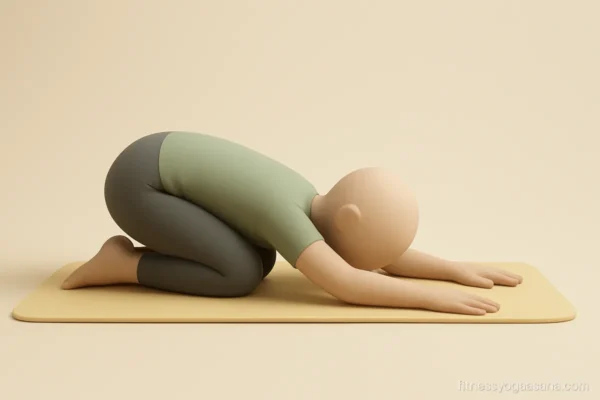 Balasana (child)Child pose: a kneeling forward rest for the back and mind
 Yoga for back painGentle poses and a daily routine for lower back pain and sciatica
 Yoga for sleepCalming bedtime poses and breathing, many done in bed
More in yoga poses
 Yoga asanas namesSanskrit and English names of common yoga poses, with pictures
 Standing yoga posesThe main standing asanas with names, pictures and a sequence
 Cat cow poseA flowing spine warm up on hands and knees, linked to the breath
 Sitting yoga posesSeated asanas for breathing, flexibility and calm, with names
 Butterfly poseSoles together, knees wide: a seated hip opener
 Tadasana (mountain)Mountain pose: the standing base for every other asana
 Vrikshasana (tree)Tree pose: a one leg balance for focus and steadiness
 Advanced yoga posesArm balances, inversions and deep bends, with prep poses