Yoga for Asthma: Gentle Breathing That Supports Care
Yoga for health 4 illustrations Updated 2 Nov 2026
Yoga for asthma can help some people feel more in control of their breathing, but it works alongside medical treatment, never instead of it. Reviews of research suggest that yoga breathing and gentle postures may modestly improve quality of life and symptoms for people with mild to moderate asthma. The evidence for changes in lung function is weaker. The main benefits appear to come from slower, calmer breathing, better posture and less anxiety, which often worsens breathlessness.
This page covers safe pranayama for asthma, chest opening poses, practices to avoid, mudra for cough and cold and what to expect from it, and the clear signs that you need urgent help. It also answers searches for yoga for lungs and yoga for breathing problems.
- Evidence
- Modest gains in symptoms and quality of life
- Best practices
- Slow nasal breathing, long exhale
- Helpful poses
- Supported chest openers, upright sitting
- Avoid
- Forceful breathing, breath holds, cold air
- Keep
- Reliever inhaler within reach
- Emergency
- Inhaler not helping, lips blue, cannot speak
Yoga for asthma: the research so far
A systematic review of trials found moderate quality evidence that yoga probably leads to small improvements in quality of life and symptoms in people with asthma, with uncertain effects on lung function and medication use. In plain words: yoga may help you feel better and cope more calmly, but it does not replace inhalers, and you should not reduce medicines without your doctor. Keep your reliever inhaler nearby during every session.
Yoga for asthma in pictures
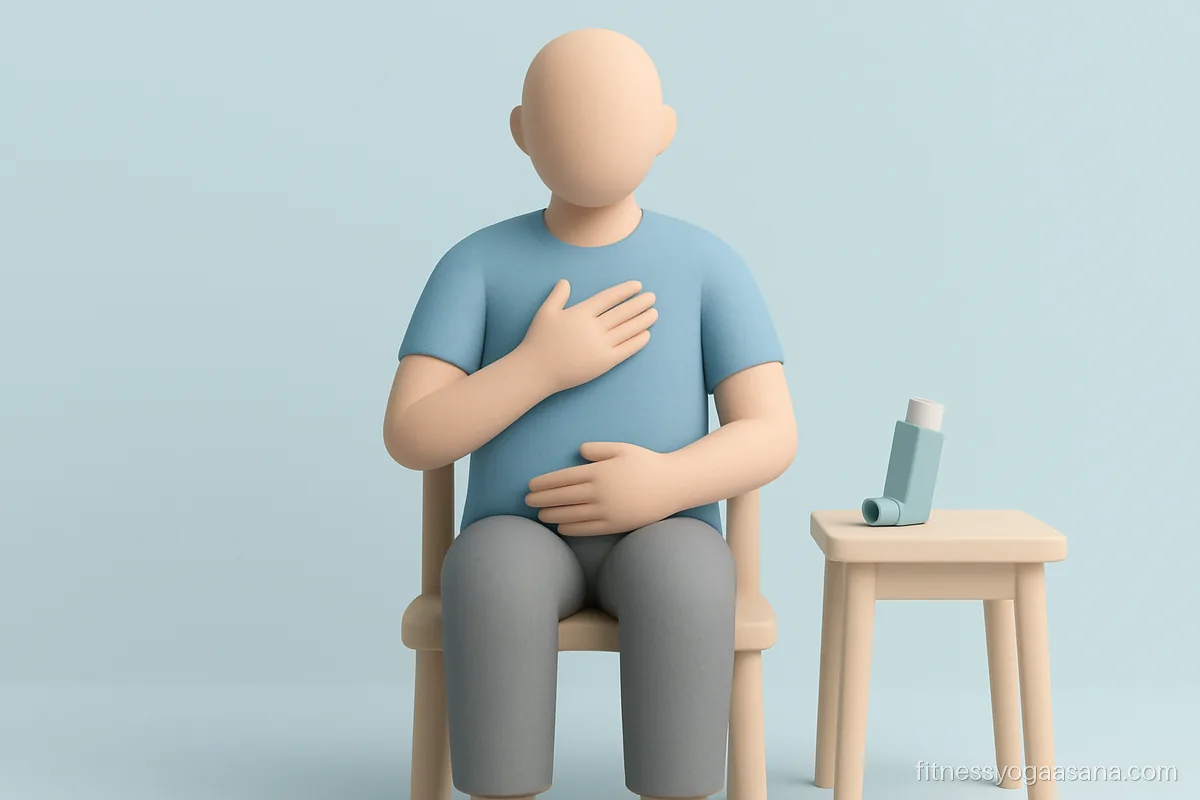
- Level
- All levels
- Hold
- 5 minutes
- Works on
- Calm breathing
Feeling the belly move more than the chest is a simple way to slow and soften the breath.
Teacher's cue: Inhale by the nose; make each outbreath a touch longer.
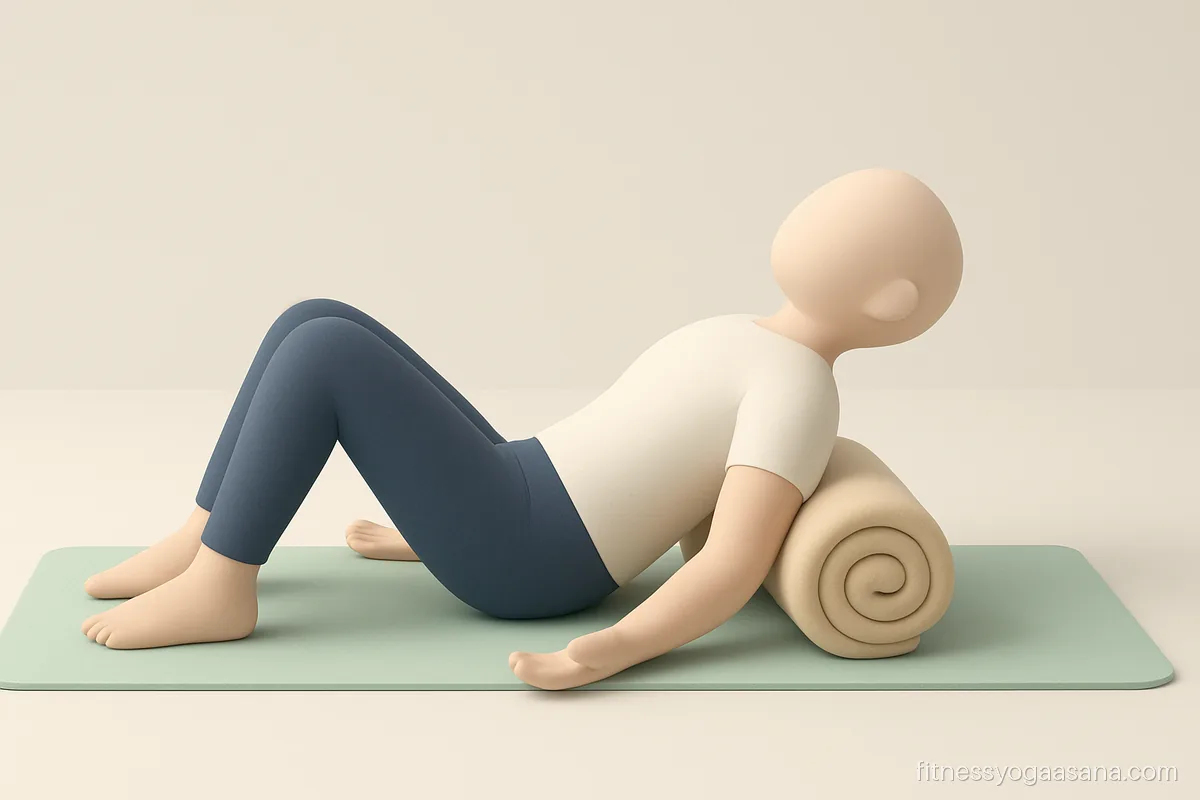
- Level
- All levels
- Hold
- 3 minutes
- Works on
- Rib mobility
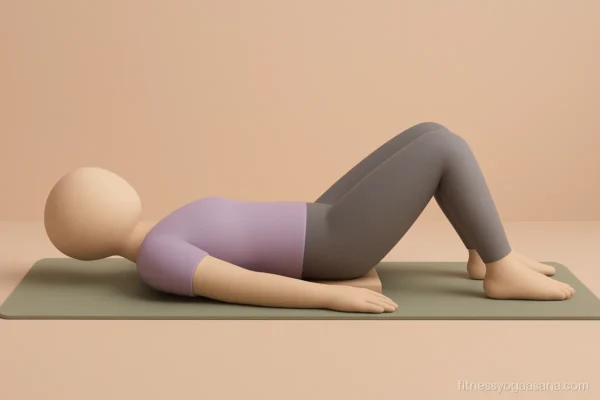
A supported chest opener lets the ribs move freely without effort.
Teacher's cue: Let the arms rest wide, palms up.
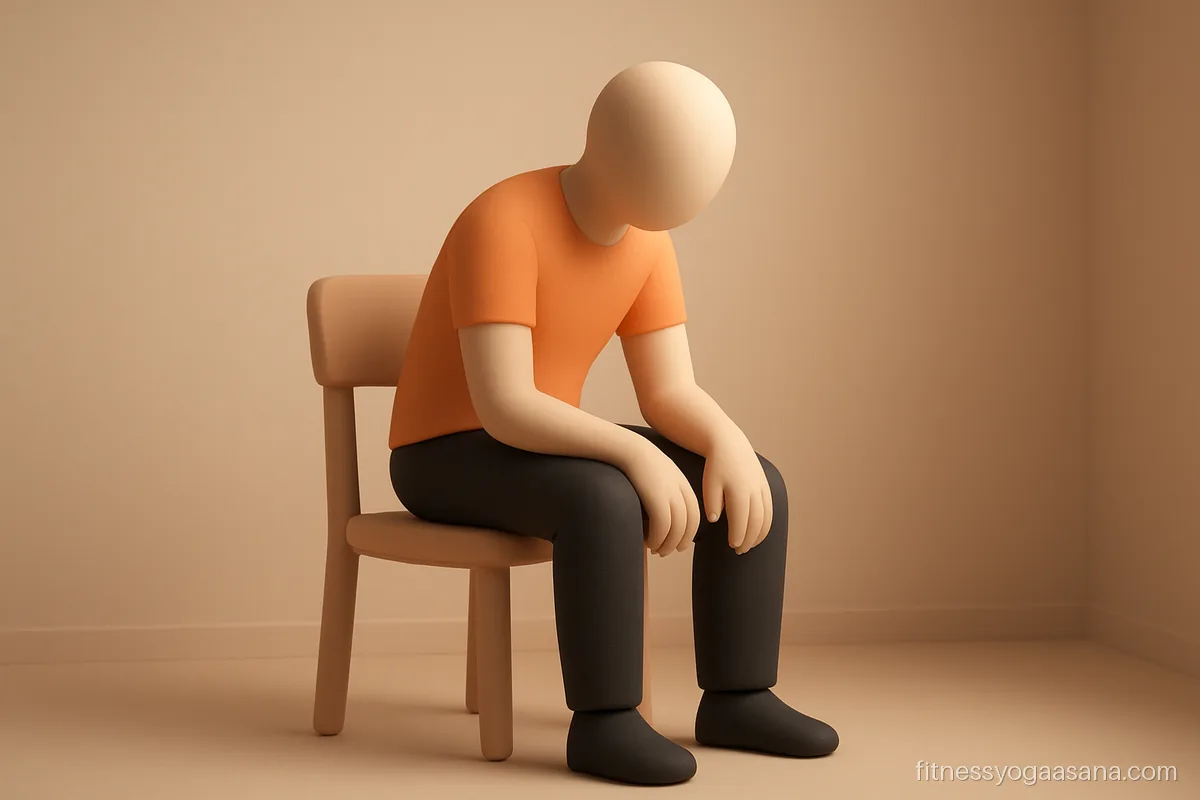
- Level
- All levels
- Hold
- As needed
- Works on
- Easier breathing
Leaning forward with forearms on the thighs is a position many people with breathlessness find easier.
Teacher's cue: Relax the shoulders and breathe out through pursed lips.
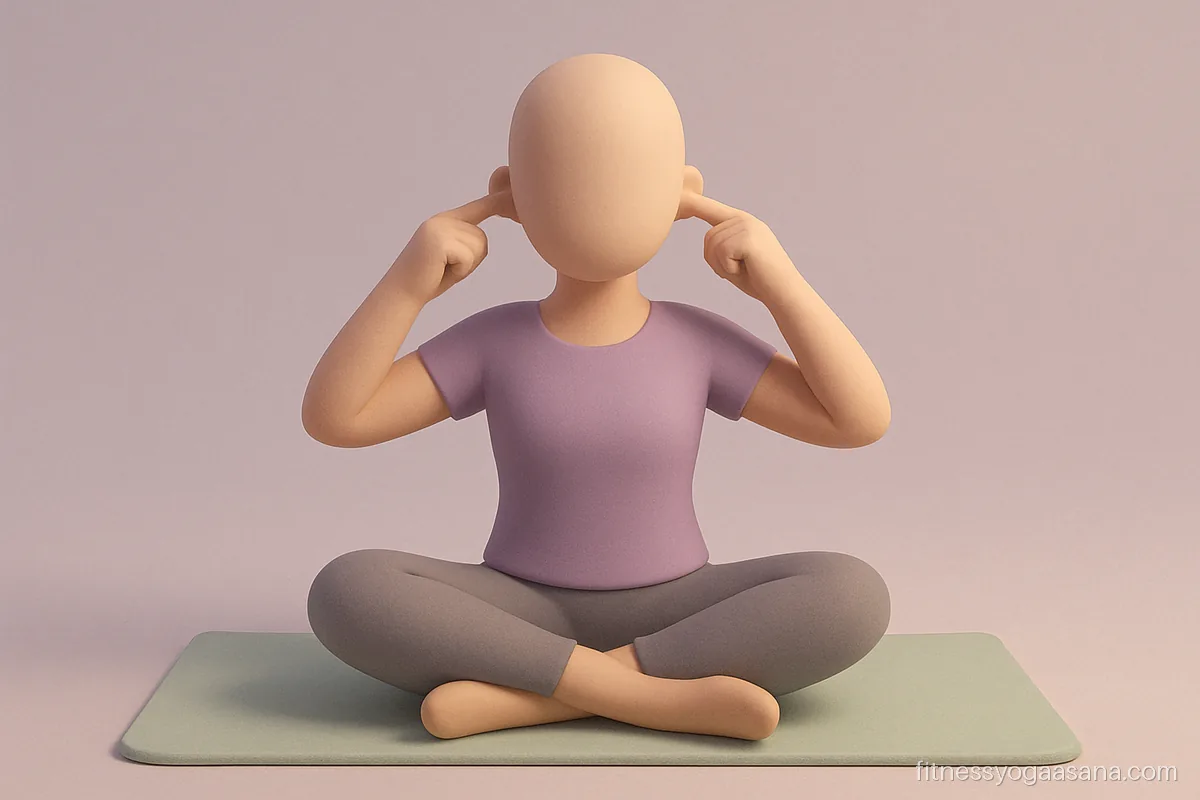
- Level
- All levels
- Hold
- 5 rounds
- Works on
- Long exhale
Humming breath naturally lengthens the exhale and is gentle on the airways.
Teacher's cue: Hum softly and stop if you feel tight.
Pranayama for asthma
- Belly breathing: one hand on the chest, one on the belly; breathe so the lower hand moves more. Five minutes.
- Long exhale breathing: in for three counts, out for five or six, through the nose.
- Pursed lip breathing: inhale nasally, then release the air slowly past softly pursed lips, useful when short of breath.
- Anulom vilom: slow alternate nostril breathing, without holding the breath.
- Bhramari: humming on the exhale, five rounds.
Stop any practice that makes you wheezy or tight.
Helpful postures
Practices to avoid
Avoid kapalbhati, bhastrika and other rapid forceful breathing, long breath holds, and very cold breathing practices such as sheetali in cold weather, since these can trigger airway narrowing in some people. Exercise outdoors on polluted or very cold days can also trigger symptoms. Warm up gradually, and if exercise brings on asthma, ask your doctor about using your inhaler beforehand.
Mudra for cough and cold
Some guides suggest linga mudra as a mudra for cold and cough, believed to warm the chest. Sitting with it while breathing slowly does no harm, yet nothing shows it clears mucus or prevents infections. For cough and cold, rest, fluids, steam inhalation and medical advice when needed are what matter. Any cough that drags on past three weeks needs a doctor's review.
Emergency signs
Use your reliever and seek urgent medical help if your reliever does not help or you need it more than every four hours, if you are too breathless to speak in full sentences, if your lips or fingertips turn blue or grey, or if you feel drowsy or confused. In India, call 108 or 112. Never try to manage a severe attack with breathing exercises alone.
Yoga for lungs in daily life
People searching yoga for lungs often want to recover after illness or improve stamina. Regular walking, good posture, the breathing practices above and avoiding smoke all support lung health. If you have a chronic lung condition, ask about a pulmonary rehabilitation programme, which combines exercise and breathing training under supervision.
Yoga for cough and cold is a common search too. During a cold, keep practice light: gentle stretches, steam, and unhurried breaths through whichever nostril is open. Yoga for asthma patients should always be paced to the day; on a bad day, the tripod rest and slow exhales are enough.
This page is general information, not medical advice. If you have a diagnosed condition, are pregnant, recently had surgery or take regular medicine, ask your doctor which practices suit you, and stop at any sharp pain, dizziness or chest discomfort.
Questions people ask
Can yoga help asthma?
It may modestly improve symptoms and quality of life when combined with medical treatment. It does not replace inhalers.
Which pranayama is best for asthma?
Slow belly breathing, long exhale breathing, pursed lip breathing, anulom vilom and bhramari.
Is kapalbhati safe for asthma patients?
It is best avoided, as rapid forceful breathing can trigger symptoms.
Is there a mudra for cough?
Linga mudra is the usual pick in old books, though it has never been shown to ease a cough.
Can I stop my inhaler if yoga helps?
No. Only change medicines with your doctor's advice.
Practise next
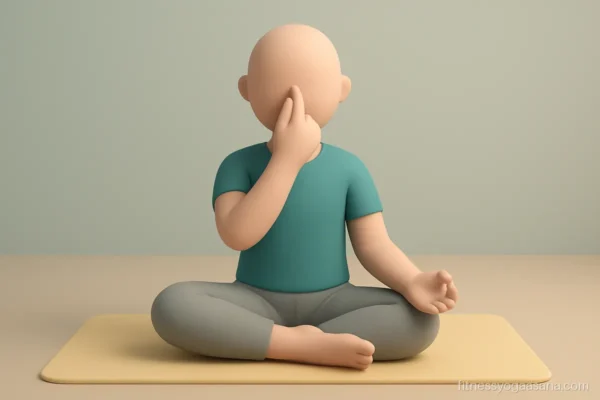 Anulom vilomSimple alternate nostril breathing, without breath holds
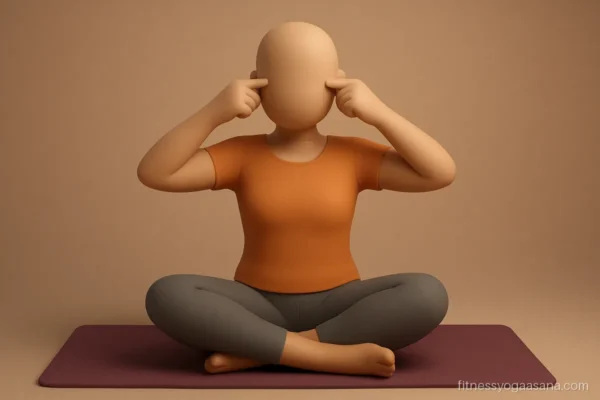 Bhramari pranayamaThe humming bee breath: steps, benefits and how many rounds
 PranayamaWhat pranayama is, how to start and every breathing practice
 Linga mudraInterlaced fingers, one thumb upright: a warming two hand seal
 Benefits of pranayamaTen benefits of yogic breathing and what studies support
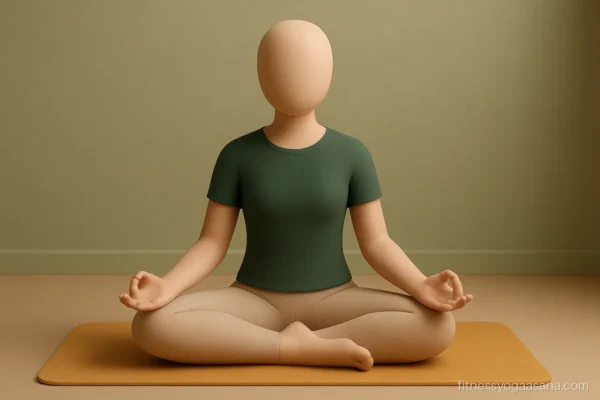 Types of pranayamaCalming, energising, cooling and balancing breath practices
More in yoga for health
 Yoga therapyHow yoga is used for health, with every condition guide listed
 Yoga for kidsEasy, playful poses and breathing games for children
 Yoga for weight lossHonest answers, the best poses and a 4 week weight loss plan
 Yoga for back painGentle poses and a daily routine for lower back pain and sciatica
 Face yogaFacial exercises for cheeks, jaw and tension, with honest results
 Gas and acidityGentle poses for trapped gas, acidity and a heavy stomach
 Yoga for belly fatCore poses, a daily plan and honest advice on waist fat
 Yoga for periodsGentle poses for cramps, irregular cycles and period days